Last reviewed: November 2026 · Sources: CDC, NIH, American Diabetes Association and peer-reviewed studies (listed at the end)
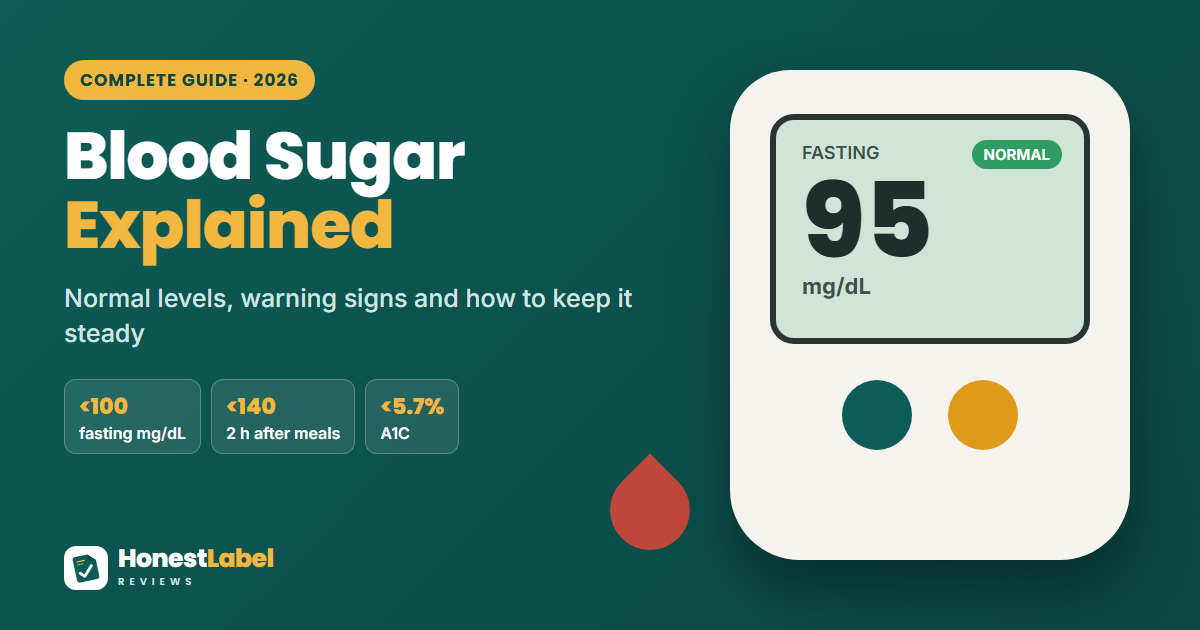
For most adults without diabetes, a normal blood sugar level is under 100 mg/dL after an overnight fast and under 140 mg/dL two hours after a meal. A fasting reading of 100 to 125 mg/dL points to prediabetes, and 126 mg/dL or higher on two separate tests points to diabetes. Anything under 70 mg/dL counts as low.
Those numbers are the short version. The longer version matters because blood sugar moves all day. It climbs after breakfast, drops when you skip lunch, and can sit high in the morning before you have eaten a thing. Knowing why it moves is the easiest way to keep it in a healthy range, and that is what this guide covers: what blood sugar actually is, the full set of normal ranges, the signs that it is running too high or too low, and the habits with real research behind them.
Later in this guide we also look at the supplements sold for blood sugar and what the research actually says about them. If you have diabetes or take medication for it, use this page as background and talk to your doctor before you change anything.
What is blood sugar?
Blood sugar, or blood glucose, is the amount of glucose floating in your bloodstream at a given moment. Glucose is the main fuel for your cells. Your brain runs almost entirely on it, and your muscles burn it whenever you move.
Most of it comes from food. When you eat bread, rice, fruit, pasta or anything sweet, your gut breaks the carbohydrates down into glucose and sends it into the blood. Your liver also makes and stores glucose, which is why your blood sugar does not crash overnight while you sleep.
The amount in your blood at any one time is surprisingly small. Researchers at Vanderbilt worked out that a healthy adult has only about 4 grams of glucose circulating in the whole bloodstream, roughly one teaspoon (Wasserman, 2009). A single can of soda has around 39 grams of sugar. That gap explains why the body works so hard to move sugar out of the blood after you eat, and why the system can go wrong.
How your body keeps blood sugar in range
Two hormones from the pancreas do most of the work, and they pull in opposite directions.
Insulin lowers blood sugar. Beta cells in the pancreas release it when glucose rises after a meal. Insulin acts like a key that lets glucose into muscle, fat and liver cells, where it is burned for energy or stored for later. Muscle takes up the biggest share of that glucose, which is one reason exercise has such a strong effect on blood sugar.
Glucagon raises blood sugar. Alpha cells in the pancreas release it when your levels fall, for example between meals or during the night. Glucagon tells the liver to release stored glucose so your brain never runs short.
Other hormones join in. Cortisol and adrenaline, the stress hormones, push blood sugar up so you have quick fuel for a fight or a sprint. Growth hormone does the same in the early morning hours. In a healthy body all of this happens quietly and keeps glucose inside a narrow band of roughly 70 to 140 mg/dL for most of the day.
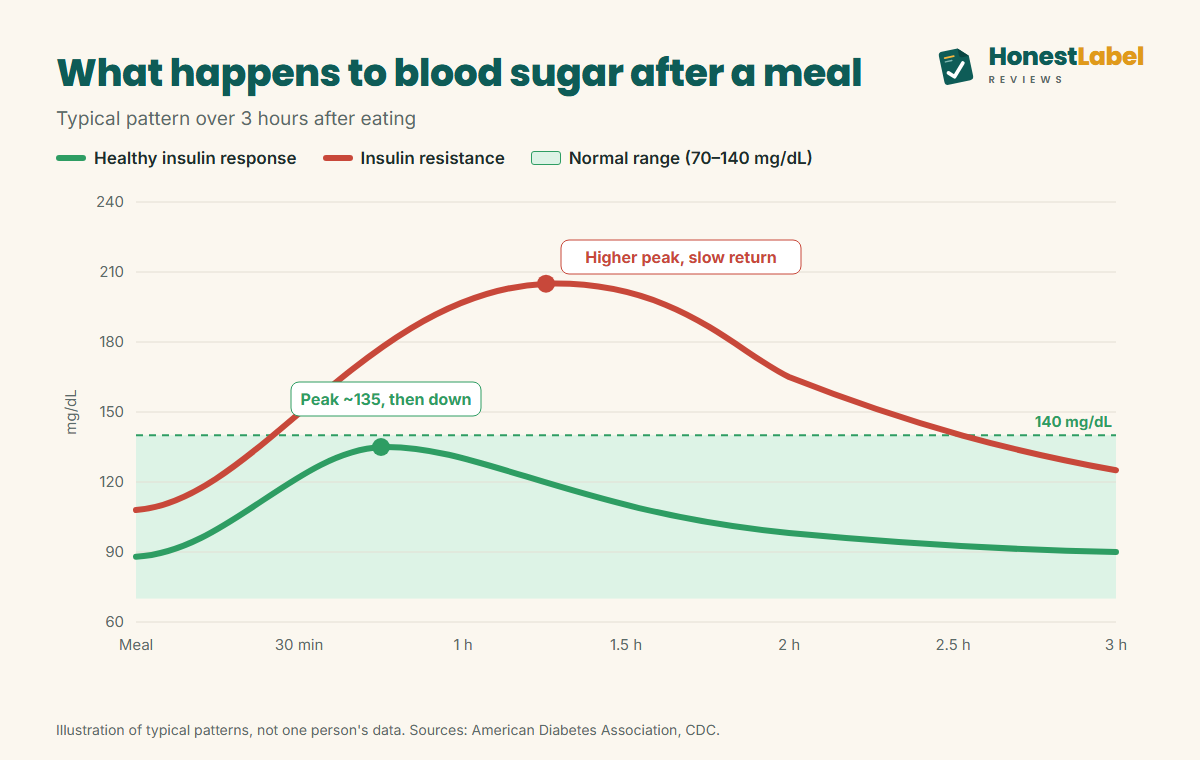
Trouble starts when this balance breaks. In type 1 diabetes the immune system destroys the beta cells, so the body makes little or no insulin. In type 2 diabetes, which accounts for about 90 to 95 percent of cases, the body still makes insulin but the cells stop responding to it properly. That is called insulin resistance, and we cover it in more detail below.
Normal blood sugar levels: the full chart
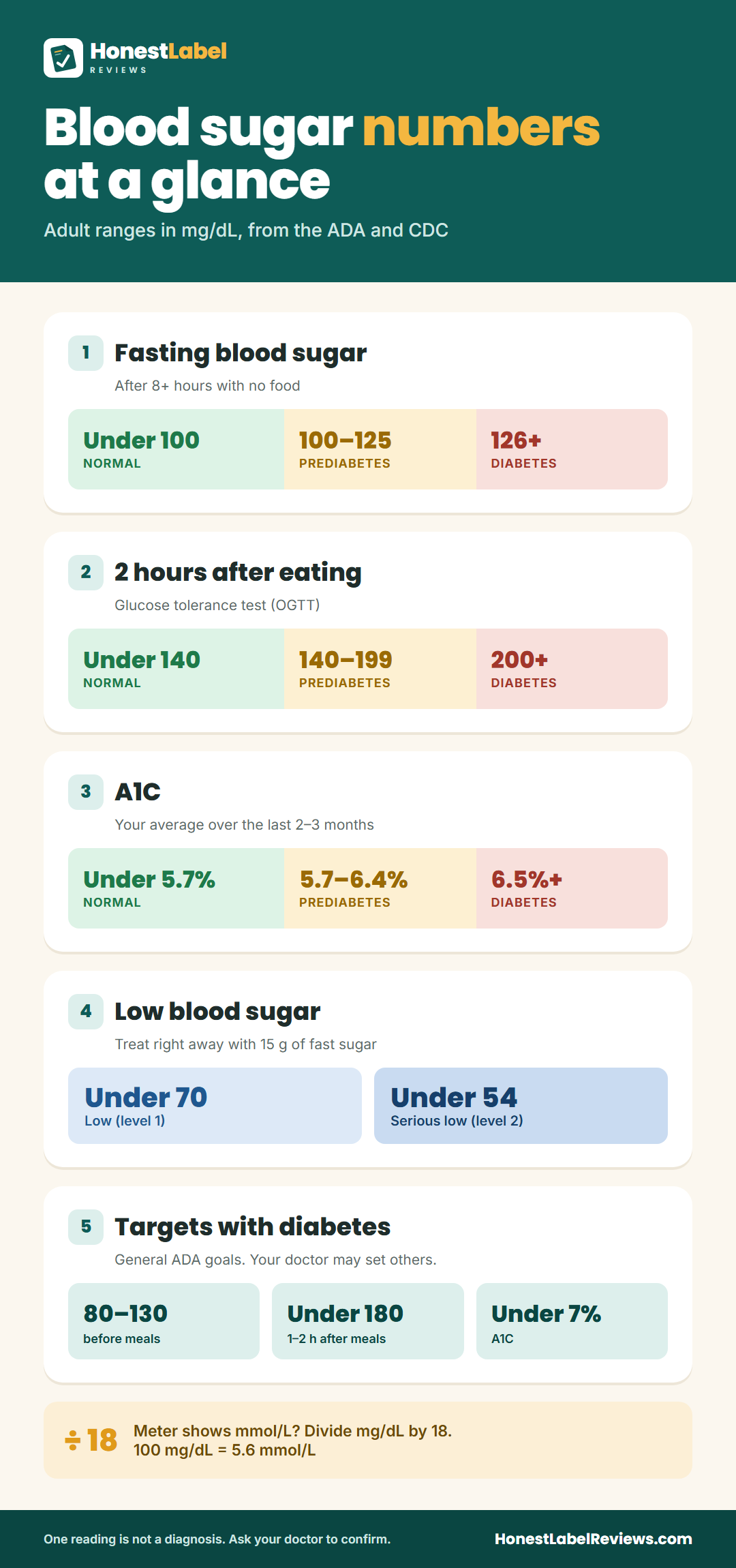
Doctors use a few different tests, and each one has its own cut-offs. The table below uses the ranges published by the American Diabetes Association and the CDC. Numbers are in mg/dL, which is the unit used in the US. If your meter shows mmol/L, divide the mg/dL number by 18 to convert.
| Test | Normal | Prediabetes | Diabetes |
|---|---|---|---|
| Fasting blood sugar (8+ hours without food) | Under 100 mg/dL (5.6 mmol/L) | 100 to 125 mg/dL | 126 mg/dL or higher |
| 2 hours after a glucose drink (OGTT) | Under 140 mg/dL (7.8 mmol/L) | 140 to 199 mg/dL | 200 mg/dL or higher |
| A1C (average over 2 to 3 months) | Under 5.7% | 5.7% to 6.4% | 6.5% or higher |
| Random test, any time of day | Usually under 140 mg/dL | No set range | 200 mg/dL or higher with symptoms |
One high reading does not mean you have diabetes. Doctors normally confirm a diagnosis with a second test on a seperate day, unless the result is very high and you already have clear symptoms.
What about blood sugar after eating?
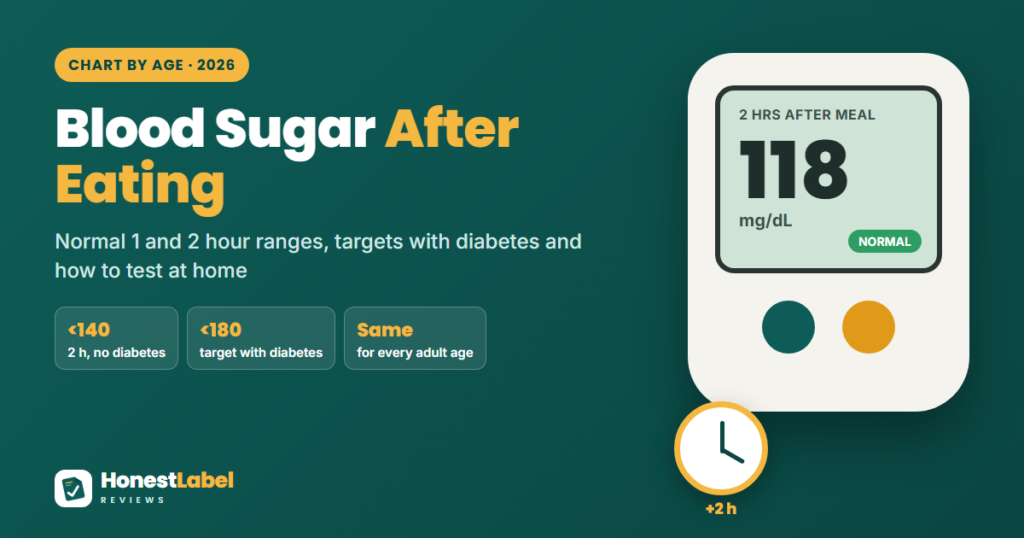
In people without diabetes, blood sugar usually peaks somewhere between 30 and 60 minutes after a meal and rarely climbs much above 140 mg/dL. By two hours it is usually back under 140, and by three hours it is close to where it started. A big plate of pasta or a sugary drink will push the peak higher than a meal built around protein and vegetables, and that is completely normal as long as the level comes back down.
Target ranges if you already have diabetes
The goals shift once you have a diagnosis, because the aim becomes avoiding both highs and dangerous lows. The ADA’s general targets for most non-pregnant adults with diabetes are:
- 80 to 130 mg/dL before meals
- Under 180 mg/dL one to two hours after starting a meal
- A1C under 7% for many adults
Your own targets may be different. Older adults, pregnant women and people who have frequent lows are often given looser or tighter goals, so go with what your doctor sets for you.
High blood sugar: what counts and why it matters
High blood sugar, or hyperglycemia, means there is more glucose in your blood than your body can clear. A single spike after a slice of birthday cake is harmless. The problem is blood sugar that stays high for months or years, because excess glucose slowly damages blood vessels and nerves.
That damage is behind the long-term complications of diabetes: heart disease, stroke, kidney disease, vision loss and nerve problems in the feet. It builds up quietly, which is why so many people have no idea anything is wrong.
The numbers are large. According to the CDC’s National Diabetes Statistics Report, about 38 million Americans have diabetes, and roughly 1 in 5 of them have not been diagnosed. Another 98 million US adults, more than a third of the adult population, have prediabetes, and most of them do not know it.
Warning signs of high blood sugar
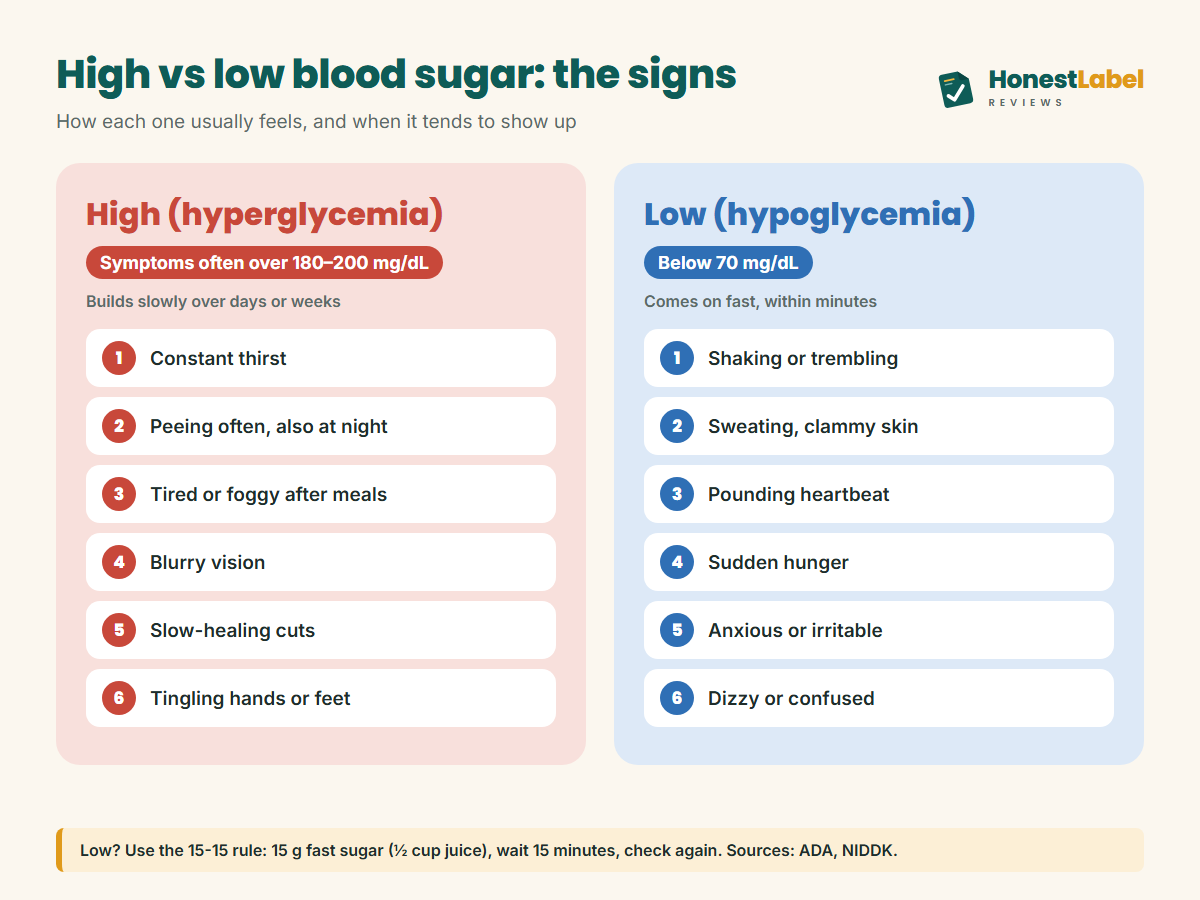
Mild high blood sugar usually causes no symptoms at all. Symptoms tend to show up once levels sit well above normal, often over 180 to 200 mg/dL, and they include:
- Being thirsty all the time
- Peeing more often than usual, especially at night
- Feeling tired or foggy after meals
- Blurry vision that comes and goes
- Cuts and sores that take a long time to heal
- Frequent infections, such as gum, skin, bladder or yeast infections
- Weight loss you cannot explain, which is more common in type 1
- Tingling or numbness in the hands or feet
The thirst and the frequent bathroom trips are linked. When blood sugar is very high, the kidneys cannot hold on to all the glucose, so they flush it out in urine and pull water along with it. You lose fluid, you get thirsty, and the cycle keeps going untill blood sugar comes down.
Very high blood sugar can turn into an emergency. Diabetic ketoacidosis (DKA), mostly seen in type 1, and hyperosmolar hyperglycemic state (HHS), mostly seen in type 2, both need hospital care. Get urgent help for blood sugar that will not come down, combined with vomiting, confusion, deep fast breathing or a fruity smell on the breath.
Low blood sugar: what counts and what to do
Low blood sugar, or hypoglycemia, is a reading below 70 mg/dL. Under 54 mg/dL is considered clinically significant, and a low that leaves someone unable to treat themselves is classed as severe.
Low blood sugar is mostly a problem for people taking insulin or certain diabetes pills, such as sulfonylureas, which push blood sugar down whether you have eaten or not. It can also happen without diabetes, for example after heavy drinking on an empty stomach, with some medicines, or in rare hormone conditions. Some people get a dip a few hours after a high-sugar meal, which doctors call reactive hypoglycemia.
Signs of low blood sugar
The body reacts to a low quickly, and the early signs come from the adrenaline rush it triggers:
- Shaking or trembling
- Sweating and clammy skin
- A fast or pounding heartbeat
- Sudden hunger
- Feeling anxious or irritable
- Dizziness, confusion or trouble speaking clearly
If the low is not treated, it can lead to seizures or loss of consciousness. Some people who have had diabetes for many years stop feeling the early warning signs, which is called hypoglycemia unawareness. Continuous glucose monitors with alarms help a lot in that situation.
The 15-15 rule for treating a low
The ADA recommends the 15-15 rule for a reading between 55 and 69 mg/dL:
- Have 15 grams of fast-acting carbohydrate. That is about half a cup (4 oz) of juice or regular soda, 1 tablespoon of sugar or honey, or 3 to 4 glucose tablets.
- Wait 15 minutes and check again.
- If you are still under 70 mg/dL, repeat.
- Once you are back in range, eat a small snack or meal if your next meal is more than an hour away.
Chocolate and other fatty sweets are a poor choice here. The fat slows digestion, so the sugar reaches your blood later than you need it. Anyone who cannot swallow safely needs glucagon or emergency help, never food or drink forced into their mouth.
Why is blood sugar high in the morning?
This is one of the most common questions we see, and it confuses a lot of people. You ate nothing after dinner, so how can your fasting number be higher than your bedtime number?
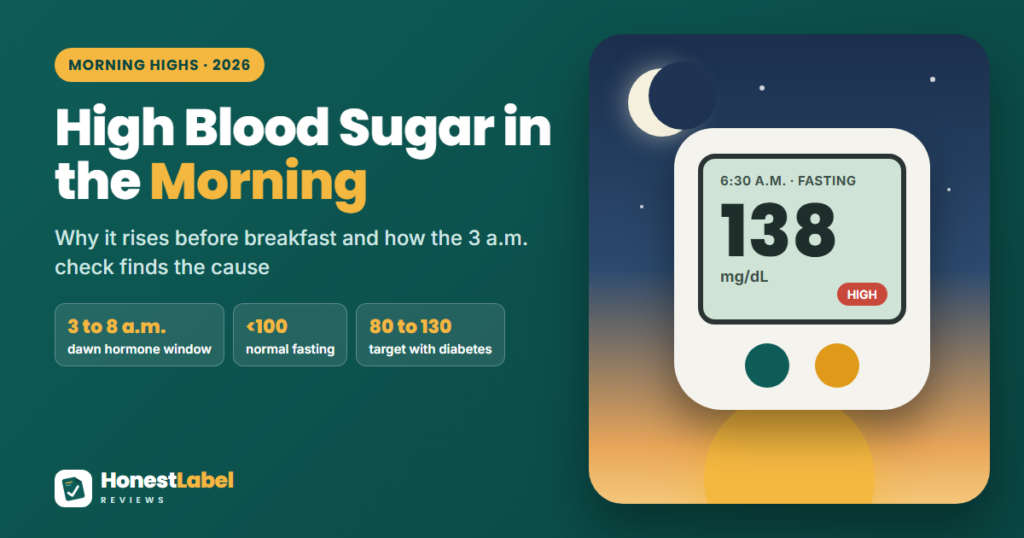
The usual answer is the dawn phenomenon. Between roughly 3 a.m. and 8 a.m. your body releases cortisol, growth hormone and other hormones that tell the liver to put out more glucose, so you have energy to wake up. In a healthy body, extra insulin handles it. With insulin resistance or diabetes, the insulin cannot keep up and the morning reading goes up.
Other causes include a late, carb-heavy dinner, a bedtime snack, a dose of medication wearing off overnight, and poor sleep. Much more rarely, a low during the night can trigger a rebound high by morning, which is called the Somogyi effect. Checking your blood sugar at around 3 a.m. for a few nights helps your doctor tell these apart.
What makes blood sugar go up (besides food)
Carbohydrates are the biggest driver, but plenty of other things move the needle. If your readings seem random, one of these is often the reason:
- Stress. Cortisol and adrenaline raise blood sugar even if you have not eaten.
- Poor sleep. In one study, a single night of only four hours of sleep made healthy volunteers measurably more insulin resistant the next day (Donga et al., 2010).
- Illness and infection. Your body releases stress hormones to fight off a cold, flu or infection, and blood sugar rises with them.
- Some medications. Steroids such as prednisone are the best-known example. Some diuretics, antipsychotics and statins can raise blood sugar a little too.
- Dehydration. Less water in the blood means the same glucose is more concentrated.
- Intense exercise. Hard sprints or heavy lifting can briefly raise blood sugar because of the adrenaline. Steady, moderate exercise lowers it.
- Hormone changes. The menstrual cycle, pregnancy and menopause all affect insulin sensitivity.
- Caffeine. Some people see a small rise after coffee, others see none. It is worth testing on yourself.
Insulin resistance and prediabetes: the stage most people miss
Type 2 diabetes almost never appears overnight. It usually starts with insulin resistance years before any blood test looks abnormal.
Here is how it develops. Fat stored around the belly and liver, inactivity, genetics and age make muscle and liver cells respond less to insulin. To keep blood sugar normal, the pancreas makes more and more insulin. For a while it works, and fasting blood sugar stays under 100. Eventually the beta cells cannot keep up, and blood sugar starts creeping into the prediabetes range and then the diabetes range.
Because the early stage has no symptoms, it is worth knowing the risk factors. The NIH’s National Institute of Diabetes and Digestive and Kidney Diseases lists these among the main ones:
- Being overweight, especially with a large waist
- Being 35 or older
- A parent or sibling with type 2 diabetes
- Being physically active less than three times a week
- High blood pressure or abnormal cholesterol
- Gestational diabetes in the past
- Polycystic ovary syndrome (PCOS)
- Being African American, Hispanic/Latino, American Indian, Alaska Native, Asian American or Pacific Islander
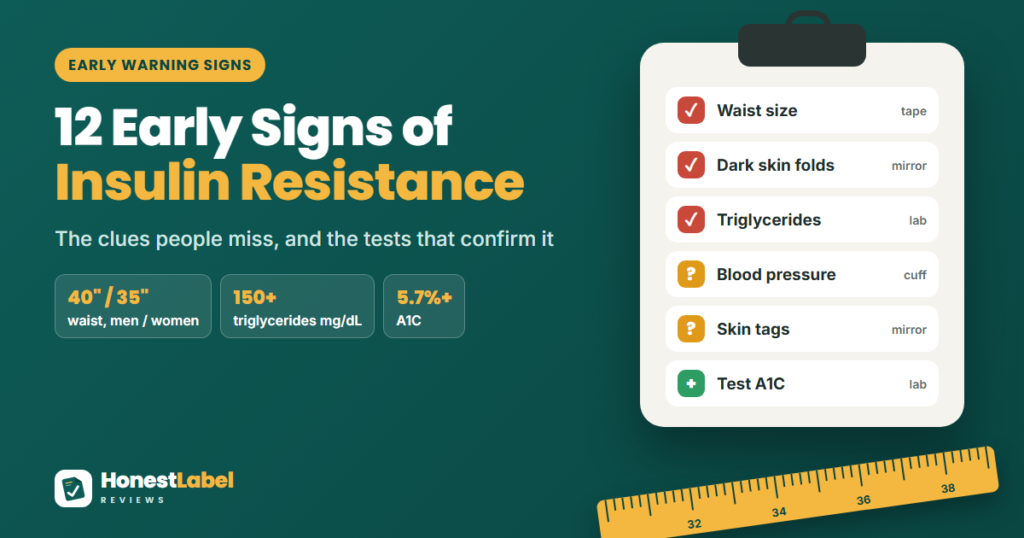
Some people get physical clues. Dark, velvety patches of skin on the neck or in the armpits (acanthosis nigricans) and lots of small skin tags are both linked to high insulin levels. If you notice these, ask your doctor for a fasting glucose or A1C test.
Prediabetes is not a guaranteed path to diabetes. It is the stage where small changes have the biggest effect, and we cover the evidence for that further down.
How blood sugar is tested
You have a few options, and each tells you something different.
Fasting plasma glucose
A simple blood draw after at least 8 hours with nothing but water. It shows where your blood sugar sits at rest and is the most common screening test.
A1C
The A1C test measures how much glucose has stuck to your red blood cells. Because those cells live for about three months, it gives an average over the past two to three months, and you do not need to fast. MedlinePlus notes that anemia and some other blood conditions can make A1C less accurate, so doctors occassionally rely on other tests instead.
Oral glucose tolerance test (OGTT)
You drink a 75-gram glucose solution and have your blood checked two hours later. It is the most sensitive test for catching problems early and is the standard test for diabetes in pregnancy.
Home meters and continuous glucose monitors
A finger-prick meter gives a single reading in a few seconds. A continuous glucose monitor (CGM) is a small sensor worn on the arm or belly that reads glucose every few minutes and sends it to your phone. Several CGMs are now sold over the counter in the US, so people without diabetes can use them too. Bear in mind that home devices are for tracking, and a diagnosis still needs a lab test.
How to keep your blood sugar steady: habits that have research behind them
The good news is that blood sugar responds well to everyday habits, and you do not need anything extreme. The biggest evidence comes from the US Diabetes Prevention Program, a study of more than 3,000 adults with prediabetes. People who lost about 7 percent of their body weight and walked around 150 minutes a week cut their risk of developing type 2 diabetes by 58 percent over about three years. The diabetes drug metformin cut it by 31 percent. Lifestyle beat the pill.
Here is what that looks like day to day.
1. Take a short walk after meals
This is our favourite habit because it is so easy. Working muscles pull glucose out of the blood with less need for insulin. A review of seven studies found that even 2 to 5 minutes of light walking after eating lowered the after-meal blood sugar rise compared with sitting (Buffey et al., 2022). Ten to fifteen minutes is better still. A walk around the block after dinner is enough.
2. Build meals around fiber and protein
Fiber slows down how fast carbs are absorbed, which flattens the spike. Most adults in the US eat about 15 grams a day, while the Dietary Guidelines suggest roughly 25 to 34 grams depending on age and sex. Beans, lentils, oats, vegetables, berries, nuts and seeds are easy ways to close the gap.
A simple way to build a plate is the method many diabetes educators teach: fill half the plate with non-starchy vegetables, a quarter with protein, and a quarter with carbs, ideally whole grains or beans.
3. Eat your carbs last
The order you eat food in seems to matter. In a small study at Weill Cornell, people with type 2 diabetes who ate vegetables and protein first and the carbohydrates 15 minutes later had noticeably lower blood sugar after the meal than when they ate the same food in the reverse order (Shukla et al., 2015). It costs nothing to try.
4. Cut back on sugary drinks
Soda, sweet tea, energy drinks and fruit juice deliver a lot of sugar with no fiber to slow it down, so they cause some of the fastest spikes of anything you can eat or drink. Swapping them for water, sparkling water or unsweetened tea is one of the simplest changes with a big payoff.
5. Lift something
Muscle is the main place your body stores glucose after a meal, so more muscle gives that sugar somewhere to go. Two or three strength sessions a week, using weights, resistance bands or your own body weight, improve insulin sensitivity. It definately does not need a gym membership. Squats, push-ups against a wall and carrying groceries all count.
6. Protect your sleep
As the study above shows, even one short night can make your body more insulin resistant. Aim for 7 to 9 hours, keep a regular bedtime, and get checked for sleep apnea if you snore loudly or wake up tired. Untreated sleep apnea is strongly linked to type 2 diabetes.
7. Lose a little weight if you need to
You do not have to reach an “ideal” weight to see results. In the Diabetes Prevention Program, losing 5 to 7 percent of body weight was enough. For a 200-pound person, that is 10 to 14 pounds.
8. Manage stress where you can
Stress hormones raise blood sugar directly. Regular exercise, time outdoors, breathing exercises and talking to someone all help. They will not fix a bad diet, but they make the other habits easier to stick with.
9. Be careful with alcohol
Alcohol can push blood sugar down, sometimes for hours, because the liver stops releasing glucose while it processes the alcohol. That is a real risk for people on insulin or sulfonylureas. If you drink, have it with food and keep it moderate.
10. Get tested on schedule
The ADA recommends screening every adult from age 35, and earlier for anyone overweight with other risk factors. If your results are normal, the usual advice is to test again every three years. If you have prediabetes, once a year is more sensible.
Do blood sugar supplements work?
Blood sugar supplements are sold everywhere, so here is a plain summary of the evidence. Supplements cannot replace medication or the habits above. A few ingredients have reasonable research behind them, but the effects are modest, and many products use doses far below what was tested in the studies.
The ingredients you will see most often:
- Berberine. A plant compound with the strongest evidence of the group. Several meta-analyses show it lowers fasting blood sugar and A1C, usually at 900 to 1,500 mg a day split into doses. It often upsets the stomach and can interact with medications, so it needs a doctor’s okay if you take anything else.
- Cinnamon. Results are mixed. Some trials show a small drop in fasting glucose and others show nothing. Cassia cinnamon, the cheap common kind, contains coumarin, which can harm the liver in large amounts.
- Chromium. Widely sold, but the NIH Office of Dietary Supplements describes the evidence for blood sugar control as inconsistent.
- Gymnema, bitter melon and alpha-lipoic acid. These have smaller, early-stage studies. Alpha-lipoic acid has more research for diabetic nerve pain than for blood sugar itself.
The biggest problem we see is the label. Many blood sugar formulas hide their doses inside a “proprietary blend”, which means you cannot tell if you are getting 500 mg of berberine or 5 mg. Before you buy, look for the exact amount of each ingredient, a dose close to what studies used, and third-party testing from a group such as NSF or USP. We cover each of these ingredients in its own guide, where you will recieve the full picture of the research and the doses that were tested.
One safety note that matters a lot: if you take insulin, metformin or any other glucose-lowering drug, adding a supplement that also lowers blood sugar can push you too low. Always tell your doctor what you are taking.
When to see a doctor
Book an appointment if you:
- Have any of the high blood sugar symptoms above, especially constant thirst and frequent urination
- Get a home reading of 126 mg/dL or higher while fasting, or 200 mg/dL or higher at any time
- Have several of the risk factors and have never been tested
- Have repeated lows, or a low that needed help from someone else
- Notice your readings changing after starting a new medication
Go to the emergency room for confusion, fainting, a seizure, or high blood sugar together with vomiting, deep fast breathing or a fruity breath smell.
Frequently asked questions
What is a normal blood sugar level by age?
For adults, the normal ranges are the same at every age: under 100 mg/dL fasting and under 140 mg/dL two hours after eating. Doctors may set looser targets for older adults with diabetes to lower the risk of dangerous lows. Children with diabetes also have their own targets, which a pediatric team sets.
Is 110 mg/dL fasting blood sugar bad?
A fasting reading of 110 mg/dL is in the prediabetes range (100 to 125). One reading is not a diagnosis, but it is a good reason to ask your doctor for an A1C test and to start on the habits above. Prediabetes can often be reversed.
What blood sugar level is dangerous?
Below 54 mg/dL is a serious low that needs treatment right away. On the high side, readings above about 250 to 300 mg/dL, especially with nausea, vomiting or confusion, need urgent medical advice because of the risk of DKA or HHS.
Can you lower blood sugar quickly?
A brisk walk and a big glass of water are the fastest safe options for most people without diabetes. People on insulin follow the correction plan their doctor gave them. There is no supplement or drink that safely brings blood sugar down within minutes.
Does fruit raise blood sugar?
Fruit contains natural sugar, so it does raise blood sugar a bit, but the fiber slows that rise down. Whole fruit like berries, apples and pears is a good choice for most people, even with diabetes. Fruit juice and dried fruit raise blood sugar much faster, wich is why it makes sense to keep those portions small.
The bottom line
Normal blood sugar is under 100 mg/dL fasting, under 140 two hours after a meal, and an A1C under 5.7%. Readings above those lines rarely cause symptoms at first, so testing is the only reliable way to know where you stand. If your numbers are creeping up, the research is encouraging: walking after meals, eating more fiber, sleeping well and losing a modest amount of weight can bring them back down, often without medication.
Over the coming weeks we will publish detailed guides on blood sugar after eating, morning highs, insulin resistance, the foods that cause the biggest spikes, and what the research says about every popular blood sugar supplement ingredient.
Sources
- American Diabetes Association. Diagnosis; Hypoglycemia (Low Blood Glucose); Checking Your Blood Glucose.
- Centers for Disease Control and Prevention. Diabetes Testing; National Diabetes Statistics Report.
- National Institute of Diabetes and Digestive and Kidney Diseases (NIH). Insulin Resistance & Prediabetes.
- MedlinePlus (US National Library of Medicine). A1C Test.
- Mayo Clinic. Dawn phenomenon.
- NIH Office of Dietary Supplements. Chromium Fact Sheet for Health Professionals.
- Diabetes Prevention Program Research Group. Reduction in the incidence of type 2 diabetes with lifestyle intervention or metformin. New England Journal of Medicine, 2002.
- Wasserman DH. Four grams of glucose. American Journal of Physiology: Endocrinology and Metabolism, 2009. PubMed.
- Donga E, et al. A single night of partial sleep deprivation induces insulin resistance in multiple metabolic pathways in healthy subjects. Journal of Clinical Endocrinology & Metabolism, 2010. PubMed.
- Buffey AJ, et al. The acute effects of interrupting prolonged sitting time in adults with standing and light-intensity walking on biomarkers of cardiometabolic health. Sports Medicine, 2022. PubMed.
- Shukla AP, et al. Food order has a significant impact on postprandial glucose and insulin levels. Diabetes Care, 2015. PubMed.
Medical disclaimer: This article is for general information and is not medical advice. It does not replace a diagnosis or treatment from your doctor. If you have diabetes or take medication that affects blood sugar, talk to your healthcare provider before changing your diet, exercise or supplements.