Last reviewed: November 2026 · Sources: CDC, NIH (NIDDK, NHLBI, Office of Dietary Supplements), MedlinePlus, Mayo Clinic and peer-reviewed studies (listed at the end)
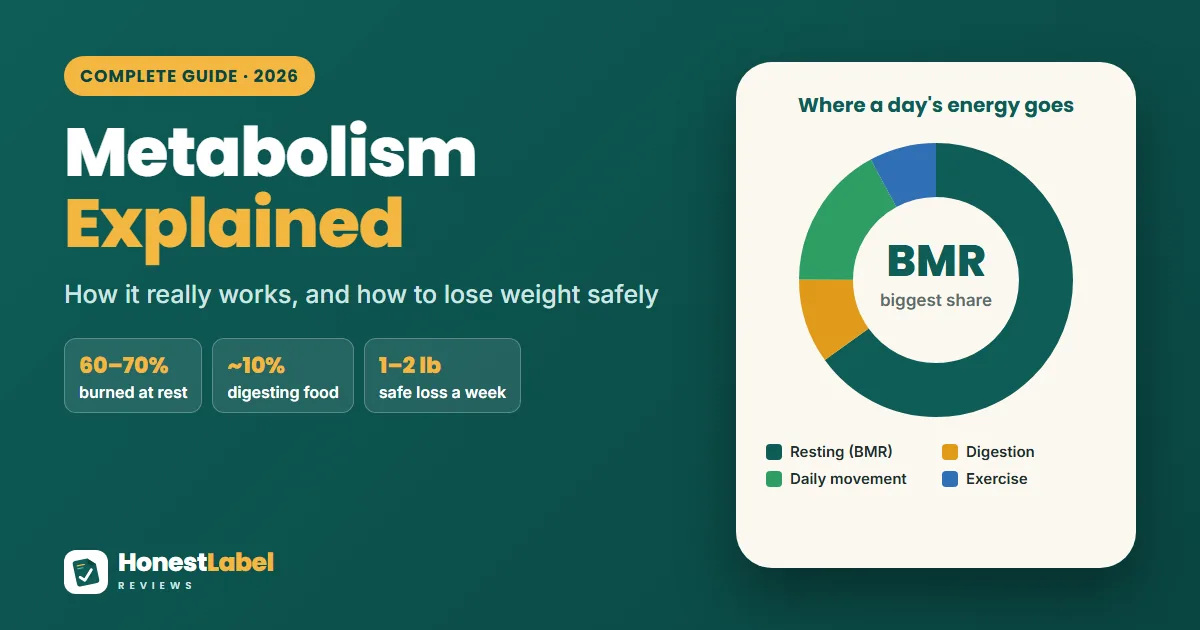
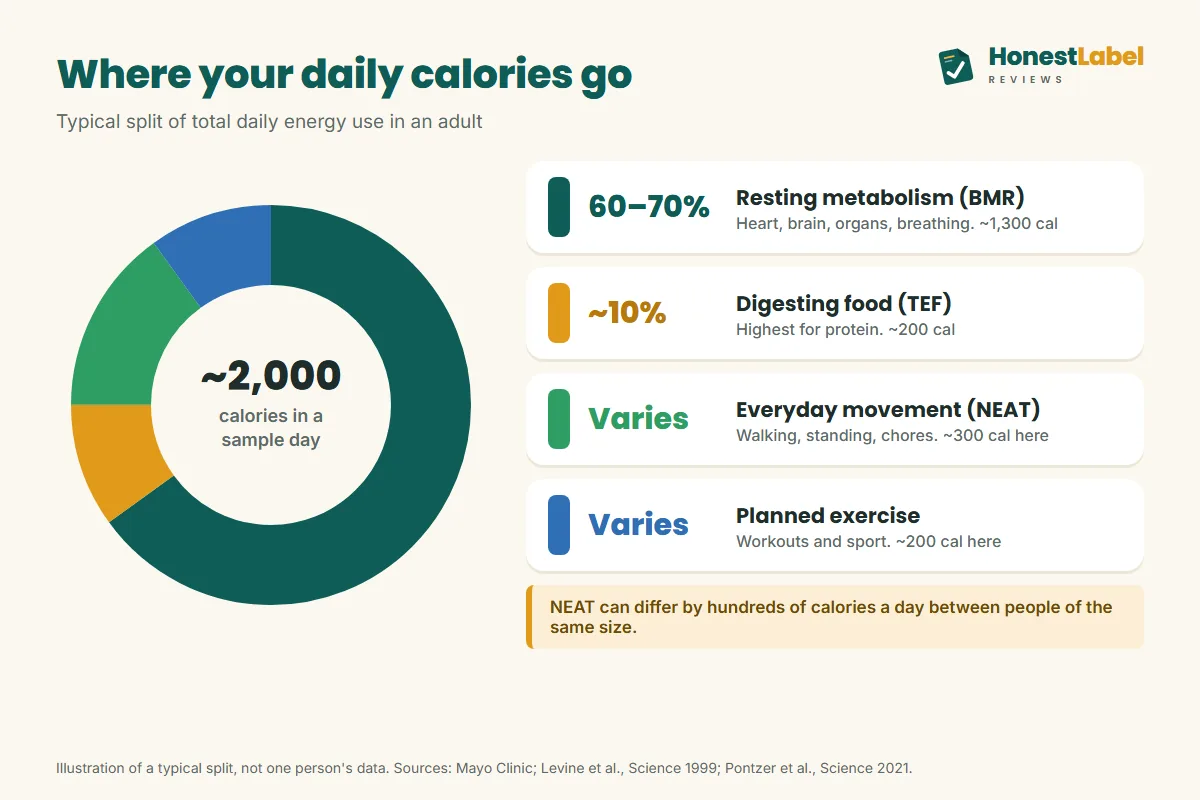
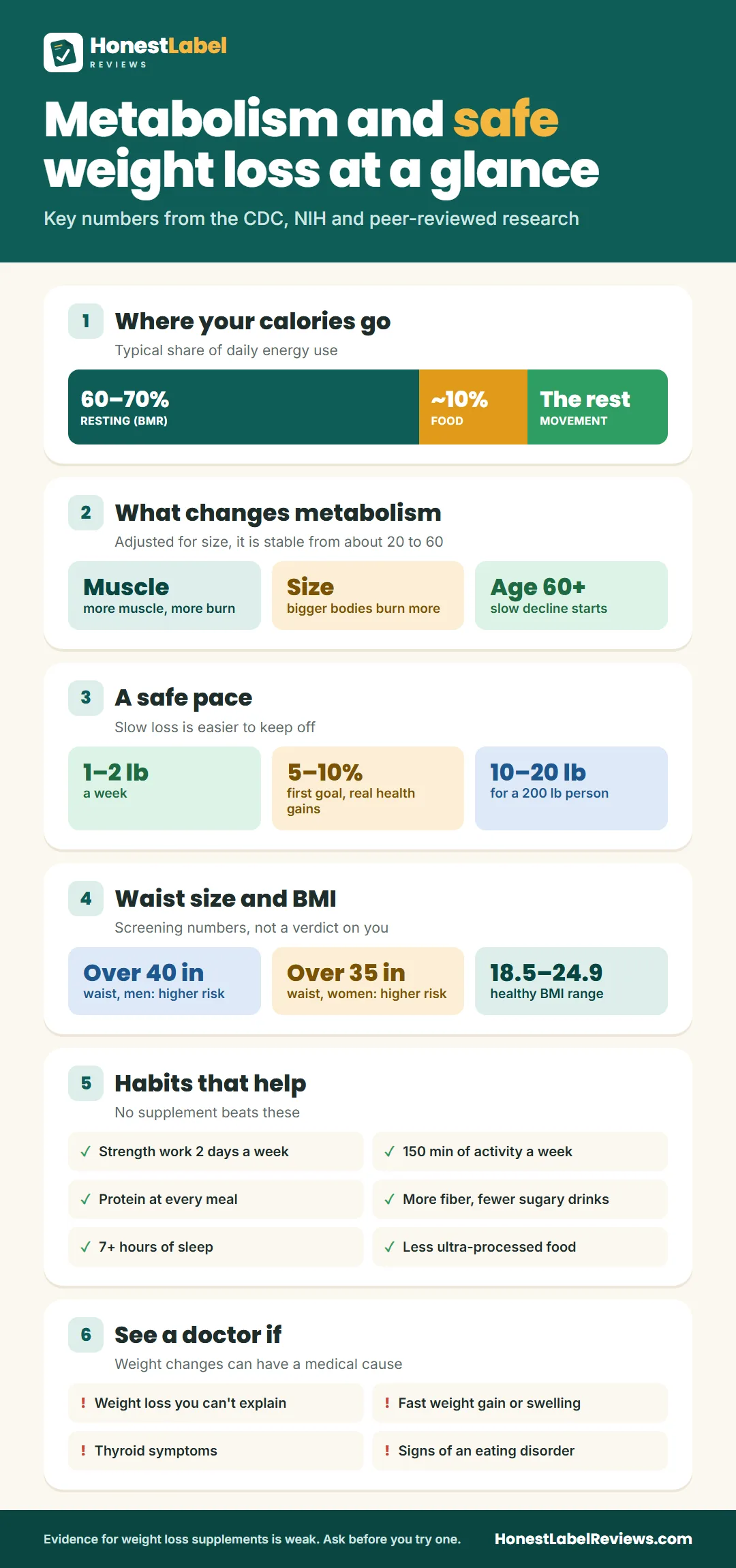
Your metabolism is the total energy your body burns each day. For most adults, about 60 to 70 percent goes to simply staying alive at rest (your BMR), about 10 percent to digesting food, and the rest to movement. A safe weight loss pace is 1 to 2 pounds a week, and losing just 5 to 10 percent of your weight brings real health benefits.
Metabolism attracts a lot of myths. People hear that it “crashed” after 30, that certain foods melt fat, or that eating too little locks the body into starvation mode. Most of that does not hold up.
This guide covers how your body spends its energy, what really changes it, how to think about weight and waist size without shame, and how to lose weight at a pace your body can accommodate. We also cover weight loss medicines and the supplements sold for metabolism. If you have a medical condition or take medication, use this page as background and talk to your doctor before you change anything.
What is metabolism?
Metabolism is every chemical process your body uses to turn food into energy and to build and repair tissue. When people say “my metabolism is slow,” they usually mean something narrower: the number of calories they burn in a day. Scientists call that total daily energy expenditure.
Your body never switches off. Even asleep, your heart beats, your lungs move air, your brain keeps firing and your kidneys filter blood. All of that costs energy, and it adds up to most of what you burn.
Weight change follows energy balance over time. If you take in more energy than you burn for weeks and months, the extra is stored, mostly as fat. If you burn more than you take in, the body draws on those stores. The idea is simple. Living with it is harder, because both sides of the equation shift as you eat less, move more or change weight, and hunger hormones push back.
Where your daily calories go
Total daily energy use has four main parts. According to the Mayo Clinic’s guide to metabolism, your resting metabolism accounts for most of the calories you burn each day, food processing for about 10 percent, and physical activity for the rest.
1. Basal and resting metabolic rate (BMR and RMR)
Your basal metabolic rate, or BMR, is the energy you burn lying completely still, awake, after a night’s sleep and a 12-hour fast, in a comfortable room. Resting metabolic rate (RMR) is the slightly easier version that clinics and studies usually measure, and it runs a little higher.
For most adults, BMR covers roughly 60 to 70 percent of total daily energy use. The biggest driver of it is body size, and in particular fat-free mass: muscle, organs, bone and water. Your liver, brain, heart and kidneys are small but very active, and together they burn a large share of your resting energy. Muscle burns more than fat at rest, though the difference per pound is smaller than fitness marketing suggests.
2. The thermic effect of food (TEF)
Digesting, absorbing and storing food costs energy too. This thermic effect of food adds up to about 10 percent of daily calories for a typical mixed diet. Protein has the highest cost of the three macronutrients, followed by carbohydrate, with fat the lowest. The effect on its own is small.
3. Exercise
Planned exercise, such as a run, a gym session or a bike ride, is often a smaller slice of the day than people expect. For someone who works out three times a week, those sessions are a modest part of the weekly total. Athletes and people with very active hobbies burn far more.
4. Non-exercise activity thermogenesis (NEAT)
NEAT is everything you do that is not sleeping, eating or formal exercise: walking to the car, standing while you cook, taking the stairs, fidgeting, cleaning, playing with kids, gardening. It is the most variable part of metabolism between people, and it can differ by hundreds of calories a day between two people of the same size.
A classic Mayo Clinic study shows how big NEAT can be. Researchers overfed 16 lean adults by 1,000 calories a day for eight weeks. Some gained ten times more fat than others, and the difference was mostly explained by how much their everyday movement went up without them trying. About two thirds of the extra energy they burned came from NEAT, not from exercise (Levine et al., 1999).
What really changes your metabolism
Some things shift your daily energy use in a noticeable way. Others get a lot of attention but move it very little.
Body size and muscle
Larger bodies burn more energy, at rest and when moving. This surprises people, but someone with a higher body weight usually has a higher BMR than a smaller person, because there is more tissue to maintain and more weight to carry. A “slow metabolism” is rarely the reason someone has a higher weight.
Muscle matters for two reasons. It adds to resting energy use, and it is the main place your body stores and burns glucose. Losing muscle, which happens with inactivity, aging and fast dieting, lowers your daily energy needs. Strength training helps you keep it.
Age: what the 2021 Science study found
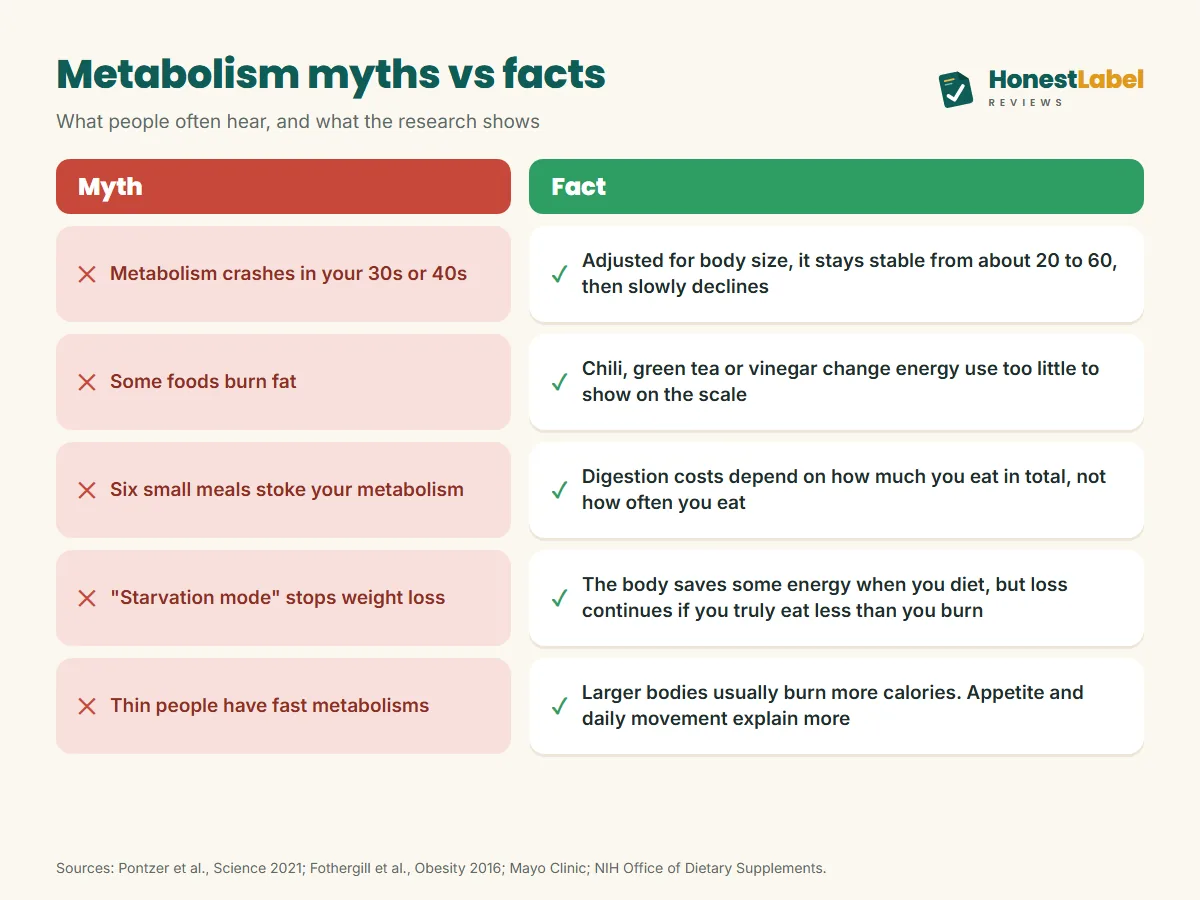
Most people believe metabolism slows steadily from your 20s or 30s. The largest study of its kind suggests otherwise. Researchers pooled doubly labelled water measurements, the gold-standard way to measure daily energy use in normal life, from people aged 8 days to 95 years (Pontzer et al., Science, 2021).
After adjusting for body size and fat-free mass, they found four life stages:
- Energy use climbs fast in infancy, to about 50 percent above adult levels at around age 1.
- It then slowly falls to adult levels by about age 20.
- It stays stable from about 20 to 60, even during pregnancy.
- It declines after about 60.
So the weight many people gain in midlife is rarely about a metabolism that “broke” at 35 or 40. Less movement, lost muscle, and changes in sleep, stress, work and eating habits all play a bigger part, and you can work on most of them.
Sex and hormones
Men tend to have a higher BMR than women of the same weight, mostly because they carry more muscle. An underactive thyroid can lower energy use and an overactive one can raise it. Menopause often shifts fat toward the belly. Some medicines, including certain antidepressants, antipsychotics, steroids and diabetes drugs, can also make weight gain more likely.
Genetics
Genes influence appetite, how full you feel, where you store fat and how much you fidget. According to the NIH’s National Institute of Diabetes and Digestive and Kidney Diseases (NIDDK), weight is shaped by many factors together: genes, family habits, sleep, stress, medicines, health conditions and the food and activity around you. It is never just willpower.
Metabolic adaptation: why weight loss gets harder
When you lose weight, your body burns less energy. Part of that is expected: a smaller body needs less fuel. But studies show the drop is often a bit larger than body size alone predicts. This extra slowdown is called metabolic adaptation, or adaptive thermogenesis. Hunger hormones also shift, so you tend to feel hungrier than before.
The most famous example comes from NIH researchers who followed 14 contestants from the TV show “The Biggest Loser.” They lost an average of about 58 kg (128 lb) during the 30-week competition. Six years later, most had regained much of it, yet there resting metabolism was still about 500 calories a day lower than expected for their size and age (Fothergill et al., 2016).
Keep that study in context. It involved extreme exercise and very fast weight loss in a small group. Metabolic adaptation in ordinary dieting is usualy much smaller, though it helps explain why weight loss plateaus after a few months and why keeping weight off takes ongoing effort.
Common metabolism myths
Myth: some foods burn fat
No food melts fat. Chili peppers, green tea, coffee, grapefruit and apple cider vinegar may nudge energy use or appetite by a tiny amount in short studies, but the effect is far too small to show up on the scale. The idea of “negative calorie” foods like celery is also a myth.
Myth: eating small meals often stokes your metabolism
The thermic effect of food depends on how much you eat in total, not how many times you eat. Six small meals and three bigger ones with the same calories cost about the same to digest.
Myth: “starvation mode” stops weight loss
This one needs nuance. Very low intake does make the body save energy, through metabolic adaptation, lower NEAT (you move less without noticing) and stronger hunger. What it cannot do is stop weight loss completely while you are truly eating less than you burn. When people stall on very low calories, the usual reasons are water shifts, intake creeping up without being tracked, and less daily movement. Severe restriction is still a bad idea, because it costs muscle, nutrients and energy, and it is hard to stick with.
Myth: thin people have fast metabolisms
Lean people often burn fewer total calories than larger people, because they have less tissue to maintain. Differences in appetite and in everyday movement explain a lot more of the variation between people than BMR does.
BMI and waist size: useful numbers, not a verdict
A number on a chart says nothing about a person’s worth or effort. Doctors still use two simple measures to estimate health risk.
Body mass index (BMI)
BMI is your weight in kilograms divided by your height in meters squared. The NIH’s National Heart, Lung, and Blood Institute (NHLBI) uses these adult categories:
| BMI | Category |
|---|---|
| Under 18.5 | Underweight |
| 18.5 to 24.9 | Healthy weight |
| 25 to 29.9 | Overweight |
| 30 or higher | Obesity |
BMI is a screening tool, and it has limits. It cannot tell muscle from fat, so very muscular people can score as overweight. It also fits some ethnic groups and ages less well. A doctor will look at BMI alongside blood pressure, blood sugar, cholesterol, fitness and family history.
Waist size
Where you carry fat matters as much as how much you carry. Fat stored deep in the belly, around the liver and other organs, is more closely tied to type 2 diabetes and heart disease than fat on the hips and thighs. The NHLBI says risk goes up with a waist size of more than 40 inches (102 cm) for men and more than 35 inches (88 cm) for women who are not pregnant.
To measure, stand up, breathe out normally and wrap a tape measure around your bare belly just above your hip bones. Keep it snug without squeezing. It can shrink with healthy habits even when the scale barely moves.
How fast should you lose weight?
Slow and steady is the pace that research backs. The CDC notes that people who lose weight gradually, at about 1 to 2 pounds a week, are more successful at keeping it off. Faster loss tends to cost more muscle, makes gallstones more likely, and is harder to sustain.
You also do not need to reach an “ideal” weight to feel the benefit. The CDC says even modest weight loss can improve blood pressure, cholesterol and blood sugar, and the NHLBI recommends a first goal of losing 5 to 10 percent of your starting weight over about six months. For someone who weighs 200 pounds, that is 10 to 20 pounds.
| Starting weight | 5% loss | 10% loss |
|---|---|---|
| 160 lb | 8 lb | 16 lb |
| 200 lb | 10 lb | 20 lb |
| 240 lb | 12 lb | 24 lb |
| 280 lb | 14 lb | 28 lb |
Skip crash diets and juice cleanses. They bring fast early losses (much of it water), more lost muscle, fatigue and, for many people, regain.
Expect plateaus. Weight usually drops faster in the first few weeks, then slows, and daily weight swings with salt, water and hormones. A weekly average gives a truer picture than any single morning.
How to boost metabolism (and what actually helps you lose weight)
You cannot dramatically speed up your metabolism. You can protect it, keep more of your muscle, move more and make eating less easier. These habits have real evidence behind them.
1. Lift weights or do resistance work
Strength training is the best tool you have for keeping muscle while you lose fat. The CDC’s physical activity guidelines recomend muscle-strengthening activity that works all major muscle groups on at least 2 days a week. Weights, bands and body-weight moves like squats all count. It definitely does not have to mean a gym.
2. Get enough protein
Protein keeps you full for longer, costs the most energy to digest and helps protect muscle when you eat less. Include a good source at each meal: eggs, fish, chicken, Greek yogurt, beans, lentils, tofu or cottage cheese. If you have kidney disease, ask your doctor how much protein is right for you before you raise it.
3. Fill up on fiber
Fiber adds bulk with few calories, slows digestion and helps you feel satisfied. Vegetables, fruit, beans, lentils, oats, whole grains, nuts and seeds are the easiest sources. Raise it gradually and drink more water.
4. Cut back on ultra-processed food
In a tightly controlled NIH trial, 20 adults lived in a research center for four weeks. When they were offered ultra-processed meals for two weeks, they ate about 500 more calories a day than during two weeks of unprocessed meals and gained weight, even though the meals were matched for sugar, fat, fiber and salt and people could eat as much as they wanted of either (Hall et al., 2019). Cooking simple meals from whole foods more often is a practical place to start.
5. Move more through the day
Because NEAT varies so much, small habits add up: walking calls, a 10-minute walk after meals, standing to fold laundry, parking further away, taking stairs. The CDC recommends at least 150 minutes a week of moderate activity such as brisk walking. If that sounds like a lot, start with 10 minutes a day and build up until it feels normal.
6. Protect your sleep
Short sleep makes weight loss harder. In a small randomized trial, 10 overweight adults followed the same reduced-calorie diet twice, once with 8.5 hours in bed and once with 5.5 hours. With short sleep, the share of weight they lost as fat fell by 55 percent and they lost more lean mass, and they also felt hungrier (Nedeltcheva et al., 2010). The American Academy of Sleep Medicine recommends at least 7 hours a night for adults.
7. Keep it sustainable
The best eating pattern is the one you can keep doing. Mediterranean, lower-carb and higher-protein eating can all work if they help you eat a little less without feeling deprived. Swapping sugary drinks for water is an easy first step. Change one or two habits at a time.
Weight, insulin resistance and blood sugar
Metabolism and blood sugar are closely linked. Extra fat stored around the belly and liver can make muscle and liver cells respond less to insulin, the hormone that moves glucose out of the blood. The pancreas compensates by making more insulin, and for years blood sugar may stay normal. Over time, insulin resistance can turn into prediabetes and type 2 diabetes.
This link works in both directions. Losing a modest amount of weight and staying active improves insulin sensitivity, and in large studies it lowered the risk of developing type 2 diabetes. If you are working on your weight, it is worth knowing your normal blood sugar ranges and asking your doctor for a fasting glucose or A1C test, especially if you have a large waist, a family history of diabetes or dark velvety skin patches on your neck or armpits.
Weight loss medicines: what to know
For some people, lifestyle changes alone are not enough, and that is not a personal failure. The NIDDK explains that prescription weight loss medicines may be an option for adults with a BMI of 30 or more, or 27 or more with a weight-related condition such as high blood pressure or type 2 diabetes. They are meant to be used together with healthier eating and activity.
The group most people have heard of is the GLP-1 receptor agonists, which include semaglutide and liraglutide. Tirzepatide works on two related hormone receptors (GIP and GLP-1). These medicines slow stomach emptying and act on appetite centers in the brain, so people feel full sooner and eat less. In a 68-week trial of 1,961 adults with overweight or obesity, people on weekly semaglutide plus lifestyle support lost about 15 percent of their body weight on average, compared with about 2.4 percent on placebo (Wilding et al., 2021).
Some important points:
- The most common side effects are nausea, vomiting, diarrhea and constipation. Rarer risks include gallbladder problems and pancreatitis.
- These drugs are not used in pregnancy and are not suitable for people with certain thyroid cancer histories.
- Weight often comes back if the medicine is stopped, according to the NIDDK, so they are usually discussed as long-term treatment.
- Strength training and enough protein matter even more on these drugs, because fast weight loss can include muscle.
- Compounded or online “copy” versions vary in quality. Only use these medicines under a doctor’s care, from a licensed pharmacy.
Older options also exist, and bariatric surgery is another proven treatment for people with severe obesity. Whether any medicine or procedure is right for you, and at what dose, is a decision to make with your doctor or pharmacist. This page does not give dosing advice.
Do metabolism and weight loss supplements work?
Supplements sold to “boost metabolism” or “burn fat” are a huge market, and the evidence behind them is mostly weak. The NIH Office of Dietary Supplements weight loss fact sheet reviews the main ingredients and concludes that most have litle or no effect, or effects too small to matter, and some carry real safety risks. Supplements also do not need FDA approval before they are sold, and weight loss products are among those most often found to contain hidden drug ingredients.
Here is what the research shows for the ingredients you will see most often:
- Green tea extract. Evidence is weak. Trials show little or no weight loss beyond diet alone. The ODS warns that concentrated green tea extract has been linked to cases of liver injury, sometimes serious. Brewed green tea as a drink is a different thing and is generally safe.
- Caffeine. Caffeine slightly raises energy use and may curb appetite for a short time, but the body adapts and the effect on weight is small. The ODS notes that up to 400 mg a day is generally considered safe for healthy adults. Many “fat burner” products stack caffeine from several sources, which can cause a racing heart, anxiety and poor sleep.
- Glucomannan. A soluble fiber from the konjac root that swells in the stomach. Results are mixed: some small trials show modest weight loss, others show none. It can cause bloating and gas, and tablets must be taken with plenty of water because of a choking risk.
- Garcinia cambogia (HCA). Weak to no evidence. Larger, better trials found little or no difference from placebo, and the ODS lists reports of liver damage with products containing it.
- Conjugated linoleic acid (CLA). Weak evidence. Any effect on body fat in trials is small, and it can upset the stomach.
- Berberine. Sometimes marketed as “nature’s GLP-1,” which is not accurate. The research on weight comes mostly from short, small trials, and any effect on weight and waist size in them is small. It lowers blood sugar, often causes stomach upset, and interacts with a number of medications.
If you still want to try a supplement, keep a few things in mind. Look for products with exact doses rather than “proprietary blends” and a third-party testing seal (USP or NSF), and stop if you get stomach pain, dark urine or yellowing skin or eyes. Tell your doctor and pharmacist what you take. Treat supplements as a separate, minor extra. None of them replaces the habits above.
Who should be careful
Talk to a doctor before starting a weight loss plan, a new exercise routine or any supplement if you:
- Are pregnant, breastfeeding or trying to get pregnant (weight loss is generally not a goal in pregnancy)
- Take insulin or other glucose-lowering drugs, since eating less, exercising more or adding berberine can push blood sugar too low
- Take blood pressure medicine, blood thinners, thyroid medicine or antidepressants
- Have heart disease, kidney disease, liver disease or gallbladder problems
- Have a history of an eating disorder
When to see a doctor
Some weight changes are a sign of an underlying problem. See your doctor if you notice:
- Weight loss you cannot explain, meaning a clear drop you were not trying for, especially with fatigue, night sweats, fever, pain or changes in bowel habits
- Weight gain you cannot explain, especially if it comes on fast or with swelling in your legs, belly or face, or shortness of breath
- Signs of an underactive thyroid: tiredness, feeling cold, dry skin, constipation, thinning hair and low mood, according to MedlinePlus
- Signs of an overactive thyroid: weight loss despite a normal appetite, a racing heart, shaking hands, sweating and anxiety
- Signs of high blood sugar: constant thirst, peeing often, blurry vision and slow-healing cuts
Signs of an eating disorder
Eating disorders can affect people of any size, age or gender. MedlinePlus describes warning signs such as eating very little or skipping meals for long stretches, binge eating with a sense of losing control, making yourself vomit or using laxatives to control weight, exercising compulsively, or feeling intense fear of weight gain. If this sounds familiar, for you or someone close to you, please talk to a doctor or mental health professional.
Frequently asked questions
What is a normal BMR?
There is no single normal number, because BMR depends on size, body composition, age and sex. Taller, heavier and more muscular people burn more at rest, and men usually burn more than women of the same weight. Online calculators give a rough estimate. Only lab testing, such as indirect calorimetry, measures it directly.
Can you really have a slow metabolism?
Some medical conditions, mainly an underactive thyroid, do lower metabolism, and some medicines make weight gain more likely. For most people, though, differences in BMR between people of the same size are fairly small. Appetite, everyday movement, sleep and muscle mass usually explain more. If you suspect a thyroid problem, a simple blood test can check.
Does metabolism slow down after 40?
According to the 2021 Science study of people aged 8 days to 95 years, energy use adjusted for body size stays stable from about 20 to 60 and only declines after that. Midlife weight gain is more often linked to less activity, lost muscle and lifestyle changes.
How can I boost my metabolism naturally?
Build and keep muscle with strength training, move more through the day, eat enough protein, sleep at least 7 hours and avoid crash diets that strip muscle. These will not double your metabolism, but they help you burn a little more and make weight loss easier to keep.
Why did my weight loss stop?
Plateaus are normal. Your smaller body needs less energy, metabolic adaptation shaves off a little more, and portions and snacks tend to creep up over time. Checking your habits, adding strength work and tracking your waist as well as the scale usually help. If you are stuck for months, a doctor or registered dietitian can look at the bigger picture.
The bottom line
Your metabolism is mostly the energy your body spends keeping you alive, plus a smaller amount for digestion and movement. It does not crash in your 30s, no food burns fat, and supplements make little difference. What you can change is your muscle, your daily movement, your sleep and the kind of food you eat most often. Aim for a slow pace of 1 to 2 pounds a week and a first goal of 5 to 10 percent, track your waist as well as your weight, and get checked if weight changes without a clear reason.
Sources
- Mayo Clinic. Metabolism and weight loss: How you burn calories.
- Centers for Disease Control and Prevention. Losing Weight; Physical Activity Guidelines for Adults.
- National Institute of Diabetes and Digestive and Kidney Diseases (NIH). Factors Affecting Weight & Health; Prescription Medications to Treat Overweight & Obesity.
- National Heart, Lung, and Blood Institute (NIH). Assessing Your Weight and Health Risk.
- NIH Office of Dietary Supplements. Dietary Supplements for Weight Loss: Fact Sheet for Health Professionals.
- MedlinePlus (US National Library of Medicine). Hypothyroidism; Eating Disorders.
- American Academy of Sleep Medicine. Seven or more hours of sleep per night: a health necessity for adults.
- Pontzer H, et al. Daily energy expenditure through the human life course. Science, 2021. PubMed.
- Levine JA, et al. Role of nonexercise activity thermogenesis in resistance to fat gain in humans. Science, 1999. PubMed.
- Fothergill E, et al. Persistent metabolic adaptation 6 years after “The Biggest Loser” competition. Obesity, 2016. PubMed.
- Hall KD, et al. Ultra-processed diets cause excess calorie intake and weight gain: an inpatient randomized controlled trial of ad libitum food intake. Cell Metabolism, 2019. PubMed.
- Nedeltcheva AV, et al. Insufficient sleep undermines dietary efforts to reduce adiposity. Annals of Internal Medicine, 2010. PubMed.
- Wilding JPH, et al. Once-weekly semaglutide in adults with overweight or obesity. New England Journal of Medicine, 2021. PubMed.
Medical disclaimer: This article is for general information and is not medical advice. It does not replace a diagnosis or treatment from your doctor. If you have a health condition or take medication, talk to your healthcare provider before changing your diet, exercise or supplements.