Last reviewed: November 2026 · Sources: CDC, NIH (NIDDK), American Diabetes Association, MedlinePlus, NEJM and peer-reviewed studies on PubMed (listed at the end)
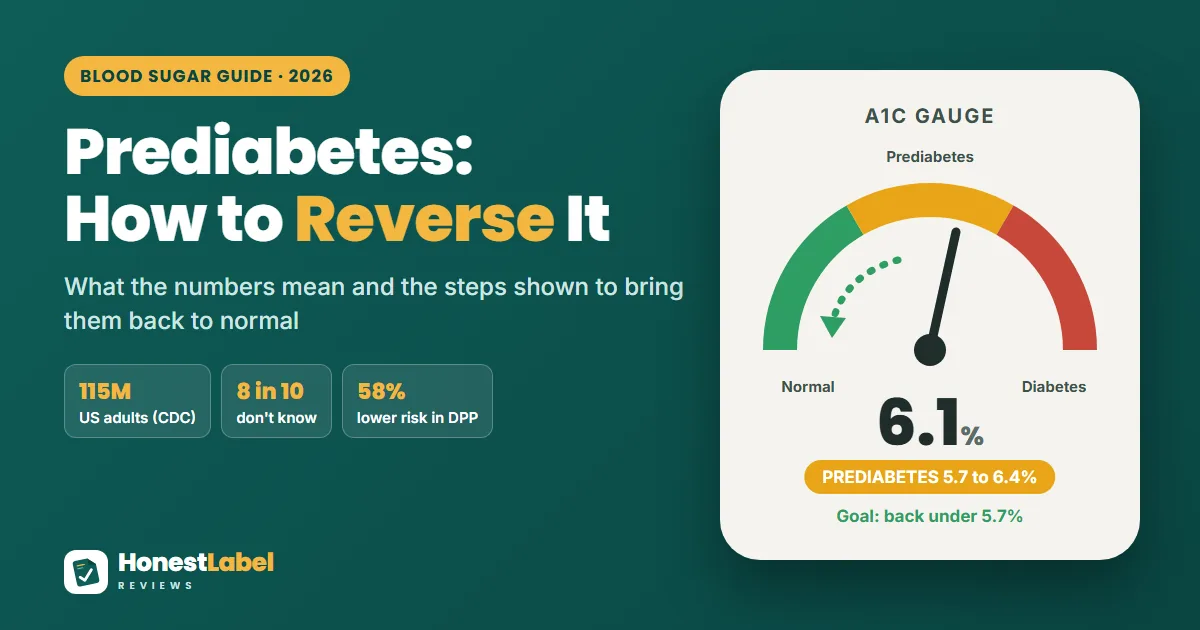
Prediabetes means blood sugar above normal but below the diabetes range: a fasting glucose of 100 to 125 mg/dL, an A1C of 5.7% to 6.4%, or 140 to 199 mg/dL on a 2-hour glucose test. Losing 5 to 7 percent of body weight and staying active cut diabetes risk by 58 percent in a major trial.
A prediabetes result often comes with no prescription and little explanation. This guide covers what the diagnosis means, how the tests define it, the risk if you ignore it, and the steps that brought people back to normal in clinical trials. For the full set of everyday numbers, see our guide to normal blood sugar ranges.
What prediabetes means
Prediabetes is the stage where your body still mostly keeps blood sugar in range, but with effort. In most people the cause is insulin resistance: muscle, liver and fat cells respond less to insulin, so the pancreas has to make more of it to move the same amount of glucose out of the blood. For years that extra insulin hides the problem. Eventually the beta cells in the pancreas fall behind, and glucose starts to creep up.
By the time fasting glucose or A1C crosses into the prediabetes range, insulin resistance has usually been building for years. For the physical clues that come earlier, see our article on the early signs of insulin resistance.
Prediabetes is extremely common. The CDC now estimates that 115.2 million American adults have it, more than 2 in 5. You may still see an older CDC figure of about 98 million quoted on some sites. It comes from earlier survey data. The newer estimate is higher, and the other headline has not changed: 8 in 10 adults with prediabetes do not know they have it.
How prediabetes is diagnosed: the three tests
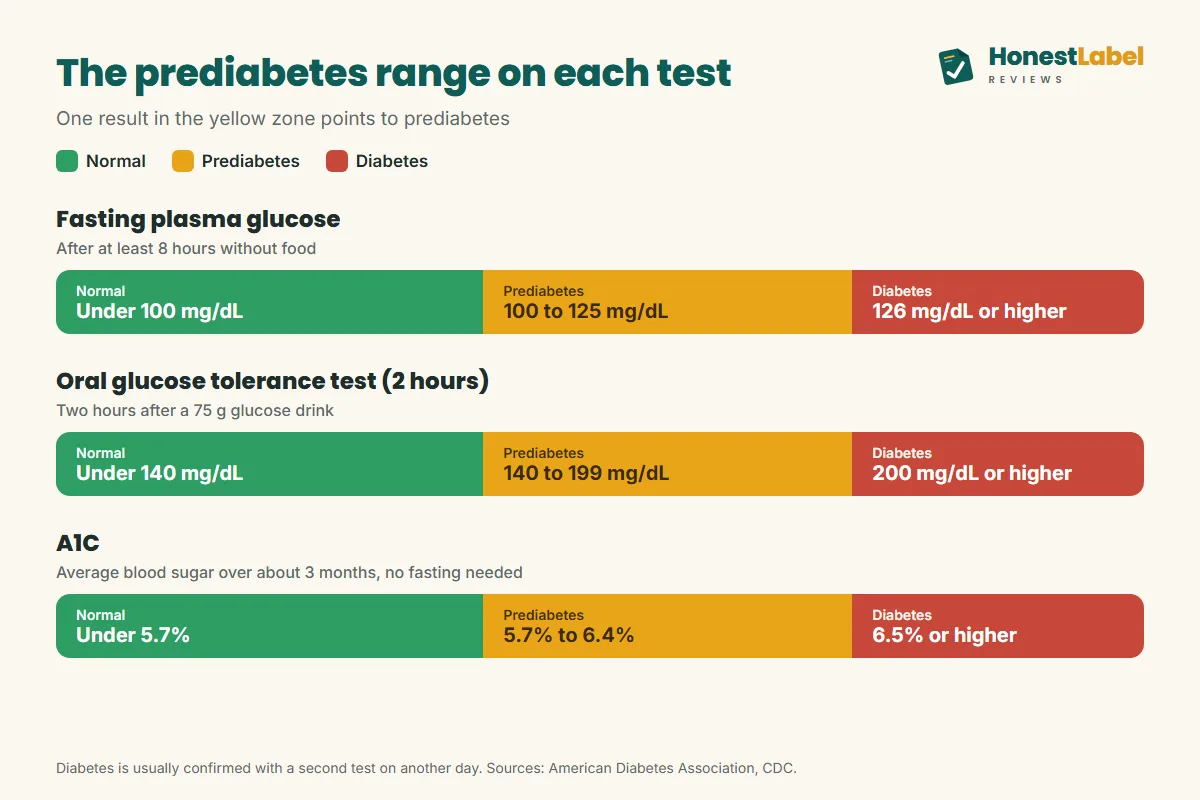
The cut-offs for the three tests come from the American Diabetes Association and match the ones the CDC uses for its prevention program.
| Test | Normal | Prediabetes | Diabetes |
|---|---|---|---|
| Fasting plasma glucose | Under 100 mg/dL | 100 to 125 mg/dL | 126 mg/dL or higher |
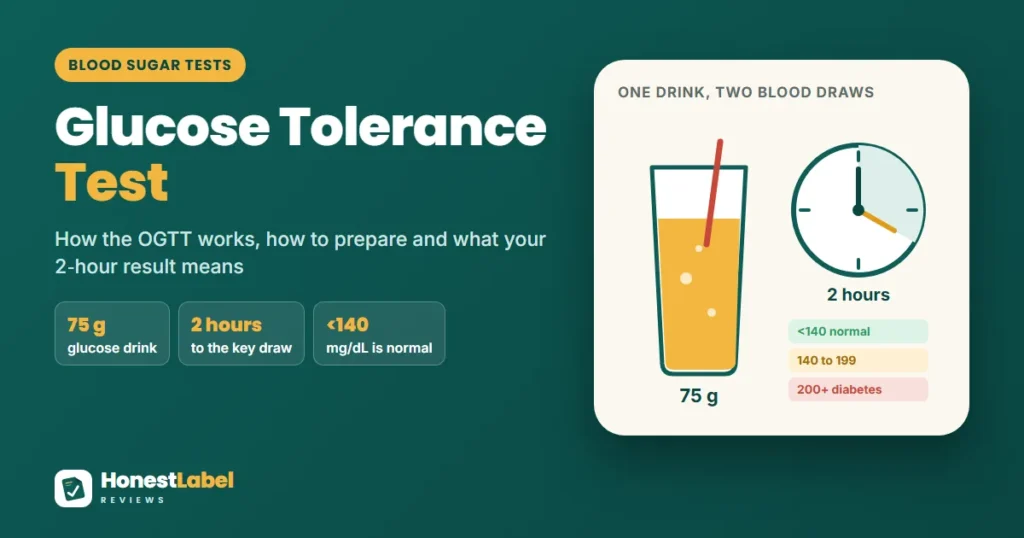
| Oral glucose tolerance test (2 hours) | Under 140 mg/dL | 140 to 199 mg/dL | 200 mg/dL or higher |
| A1C | Under 5.7% | 5.7% to 6.4% | 6.5% or higher |
A fasting result in the prediabetes range is sometimes called impaired fasting glucose (IFG). A high 2-hour result is called impaired glucose tolerance (IGT). Some people have one, some both, and some only a raised A1C, so two people with the same diagnosis can have quite different numbers.
A single borderline result is worth confirming. A fasting test after a bad night of sleep or a stressful week can read a few points high, so many doctors repeat it or add an A1C.
Who should get tested
The CDC lists these risk factors on its prediabetes page:
- Having overweight
- Being 45 or older
- A parent, brother or sister with type 2 diabetes
- Being physically active fewer than three times a week
- Having had gestational diabetes, or a baby that weighed more than 9 pounds
- Polycystic ovary syndrome (PCOS)
- Being African American, Hispanic or Latino, American Indian, Alaska Native, Pacific Islander, or some Asian American groups
The CDC’s one-minute Prediabetes Risk Test is a quick start. A score of 5 or higher counts as high risk.
Are there symptoms?
MedlinePlus notes that the condition usually has no clear symptoms. A few people notice darker, velvety skin on the neck or armpits,, and thirst or tiredness can mean the numbers have already reached the diabetes range. Feeling fine tells you little about your blood sugar, which is why a test is worth more than how you feel.
What happens if you do nothing
Prediabetes is a risk state, and the risk is real. A review in The Lancet estimated that about 5 to 10 percent of people with prediabetes progress to diabetes each year, and that up to 70 percent will develop diabetes at some point in their lives (Tabák et al., 2012). The rate depends heavily on which test is abnormal, your weight and your age.
In the placebo group of the US Diabetes Prevention Program, adults with overweight and impaired glucose tolerance who got standard advice developed type 2 diabetes at a rate of about 11 in 100 per year (Knowler et al., NEJM 2002).
Insulin resistance also raises the risk of heart disease and stroke before diabetes appears, so it makes sense to have your blood pressure and cholesterol checked too.
Can prediabetes be reversed?
Yes, for many people. Two large trials found the same result.
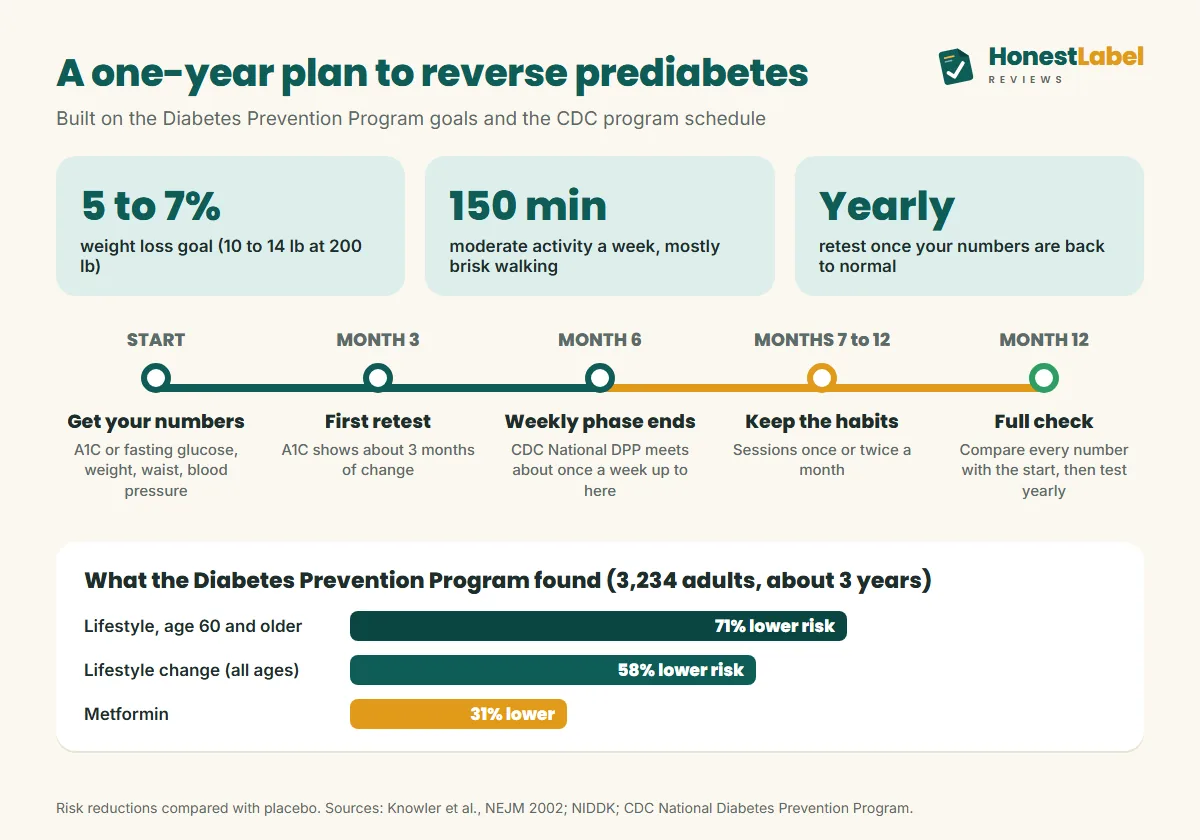
- The Diabetes Prevention Program (US). 3,234 adults with prediabetes were split into a lifestyle group, a metformin group and a placebo group. The lifestyle group aimed to lose 7 percent of body weight and do 150 minutes of moderate activity a week. Their diabetes risk fell by 58 percent compared with placebo. Metformin lowered it by 31 percent. In adults aged 60 and older, lifestyle change cut risk by 71 percent (Knowler et al., 2002).
- The Finnish Diabetes Prevention Study. 522 middle-aged adults with overweight and impaired glucose tolerance got individual diet and exercise counseling or general advice. Over about 3 years, the counseled group had a 58 percent lower risk of diabetes (Tuomilehto et al., NEJM 2001).
The benefit lasted. After 15 years of follow-up, the DPP lifestyle group still had a 27 percent lower rate of diabetes than the placebo group, according to the NIDDK, even though most people regained some weight.
Getting your numbers all the way back to normal matters too. A later analysis of DPP participants found that people who reached normal glucose levels atleast once during the study had a 56 percent lower risk of developing diabetes over the following years than people who never did, whichever group they had been in (Perreault et al., Lancet 2012). This was an observational finding, so it shows a link rather than proof, but it makes normal readings a sensible target.
What “reversed” really means
Doctors usually call prediabetes reversed when your test results go back under the prediabetes cut-offs: fasting glucose under 100 mg/dL, A1C under 5.7%, or a 2-hour result under 140 mg/dL. The underlying tendency does not vanish. If the weight comes back or activity drops, the numbers can climb again, so keep testing every year even after a good result.
How to reverse prediabetes: a step-by-step plan
Our guide on how to lower blood sugar naturally covers each habit in depth. This is the first-year plan, built from the trial goals.
Step 1: Know your starting numbers
Write down each result, its date and the test used. If only a fasting glucose was done, ask for an A1C as well. Note your weight, waist size and blood pressure so you can compare at three and twelve months.
Step 2: Work out your weight goal
The DPP target was 7 percent of body weight, and the NIDDK describes 5 to 7 percent as enough to make a difference. Multiply your weight by 0.05 and 0.07 to get your range.
| Starting weight | 5% goal | 7% goal |
|---|---|---|
| 150 lb | 7.5 lb | 10.5 lb |
| 180 lb | 9 lb | 12.6 lb |
| 200 lb | 10 lb | 14 lb |
| 250 lb | 12.5 lb | 17.5 lb |
In the DPP, lifestyle participants got there gradually, with a target of about 1 to 2 pounds a week through a lower calorie and lower fat diet (Knowler et al., 2002). People already at a healthy weight can still improve their numbers through activity and diet quality.
Step 3: Build up to 150 minutes of activity a week
The DPP goal was 150 minutes a week of moderate activity, mostly brisk walking. That is 30 minutes on five days, or three 10-minute walks a day. If you are starting from very little, begin with 10 minutes a day and add 5 each week, then add two short strength sessions, because muscle takes up most of the glucose after a meal.
Step 4: Change what goes on your plate
No special diet is needed. The changes that move numbers are plain: fewer sugary drinks, smaller portions of refined starches, more vegetables, beans and whole grains, and protein at each meal. Our list of foods that spike blood sugar, with smart swaps is a good place to find your own biggest offenders. Two swaps you keep for good will do more then a dozen you drop after a month.
Step 5: Join a structured program if you can
People do better with support, and the US government funds a program built on the DPP. The CDC’s National Diabetes Prevention Program offers a yearlong lifestyle change course led by a trained coach:
- The first 6 months meet about once a week, and the second 6 months meet once or twice a month.
- You can join in person, fully online, through distance learning, or a mix, so most schedules can be accommodated.
- Costs vary and some programs are free. Some employers and insurers cover it, and Medicare runs its own version, the Medicare Diabetes Prevention Program, with separate rules.
To be eligible, you need to be 18 or older, have a BMI of 25 or higher (23 or higher for Asian American adults), not be pregnant, and not already have type 1 or type 2 diabetes. You also need one of these: a blood test in the prediabetes range in the past year, a past diagnosis of gestational diabetes, or a score of 5 or more on the Prediabetes Risk Test.
Step 6: Fix the hidden drivers
Loud snoring or waking up exhausted can point to sleep apnea, which is worth a sleep study. Steroids, some antipsychotics and some diuretics can raise blood sugar too. Never stop a prescribed drug yourself, but ask your doctor whether one plays a part.
Step 7: Retest on a schedule
A1C reflects roughly the past three months, so a retest at about 3 months shows whether the plan is working. After that, the ADA advises testing people with prediabetes at least once a year. Keep a simple log of weight, activity minutes and results.
Is medication ever used for prediabetes?
Somtimes. Metformin is not FDA-approved specifically for prediabetes, but the ADA’s Standards of Care say doctors can consider it for people at the highest risk, especially those with a BMI of 35 or more, those under 60, and women who had gestational diabetes. In the DPP it lowered risk by 31 percent, less than lifestyle change overall. Long-term use can lower vitamin B12, so doctors check it now and then.
Supplements sold for prediabetes have far weaker evidence, and none has trial results close to the DPP. Tell your doctor before you take one.
Safety: who should be careful
- If you already take glucose-lowering medicine, including insulin or a sulfonylurea such as glipizide, more activity and fewer carbs can push you below 70 mg/dL. Ask your doctor whether a dose needs to change. The ADA treats anything under 54 mg/dL as a serious low.
- Pregnancy: weight loss is not advised during pregnancy, and the CDC program excludes pregnant women. Your prenatal team will check for gestational diabetes instead.
- Kidney or liver disease: ask before raising protein a lot or starting any supplement.
- Heart disease, diabetic eye disease or joint problems: get cleared before hard workouts or heavy lifting.
When to see a doctor
- You have two or more risk factors and have never had your blood sugar tested
- A home or pharmacy reading shows fasting glucose of 100 mg/dL or more
- You have symptoms such as constant thirst, frequent urination, blurred vision or weight loss you cannot explain, which can mean you have already moved into the diabetes range
- Your retest shows a fasting glucose of 126 mg/dL or more, or an A1C of 6.5% or more
- You get readings over 250 mg/dL with vomiting, deep fast breathing or confusion: get urgent care
Frequently asked questions
Can prediabetes go away on its own?
It can. In trials, some people in the placebo groups returned to normal readings without a structured program. It is less likely without changes, though, and the average risk keeps rising with age.
How long does it take to reverse prediabetes?
Fasting and after-meal readings can improve within weeks of more activity and fewer sugary drinks. A1C needs about three months to reflect the change, so most people see a meaningful result at the 3 or 6 month retest.
Is an A1C of 6.0 prediabetes?
Yes. Any A1C from 5.7% to 6.4% is in the prediabetes range. Risk rises toward the top of that range, so an A1C of 6.0% to 6.4% is a stronger reason to act now than a 5.7%.
Do I need to cut out carbs to reverse prediabetes?
No. The DPP lifestyle group ate a lower calorie, lower fat diet that still included carbohydrates. Cutting sugary drinks and refined starches helps a lot, and some people find a lower carb pattern easier, but no single diet is required.
The bottom line
Prediabetes means a fasting glucose of 100 to 125 mg/dL, a 2-hour result of 140 to 199 mg/dL or an A1C of 5.7% to 6.4%. It affects more than 2 in 5 US adults, and most of them have no idea. Losing 5 to 7 percent of your weight and reaching 150 minutes of activity a week cut diabetes risk by more than half in two large trials. Get your numbers, pick your first two changes and retest in three months. We truly think that retest is the most useful number of the year. If you would like to receive structured help, ask your doctor about a National DPP provider.
Sources
- Centers for Disease Control and Prevention. Prediabetes: Could It Be You?; Prediabetes: Your Chance to Prevent Type 2 Diabetes.
- CDC. National Diabetes Prevention Program: Lifestyle Change Program Details; Are You Eligible to Join?
- American Diabetes Association. Diagnosis.
- MedlinePlus (US National Library of Medicine). Prediabetes.
- NIDDK (NIH). Diabetes Prevention Program (DPP).
- Knowler WC, et al. Reduction in the incidence of type 2 diabetes with lifestyle intervention or metformin. NEJM, 2002.
- Tuomilehto J, et al. Prevention of type 2 diabetes mellitus by changes in lifestyle among subjects with impaired glucose tolerance. NEJM, 2001. PubMed.
- Perreault L, et al. Regression from pre-diabetes to normal glucose regulation is associated with long-term reduction in diabetes risk: results from the Diabetes Prevention Program Outcomes Study. Lancet, 2012. PubMed.
- Tabák AG, et al. Prediabetes: a high-risk state for diabetes development. Lancet, 2012. PubMed.
- American Diabetes Association Professional Practice Committee. Prevention or delay of diabetes and associated comorbidities: Standards of Care in Diabetes. Diabetes Care. PubMed.
Medical disclaimer: This article is for general information and is not medical advice. It does not replace a diagnosis or treatment from your doctor. If you have diabetes or take medication that affects blood sugar, talk to your healthcare provider before changing your diet, exercise or supplements.