Last reviewed: November 2026 · Sources: Mayo Clinic, Cleveland Clinic, NIDDK (NIH), MedlinePlus, the Endocrine Society and peer-reviewed studies (listed at the end)
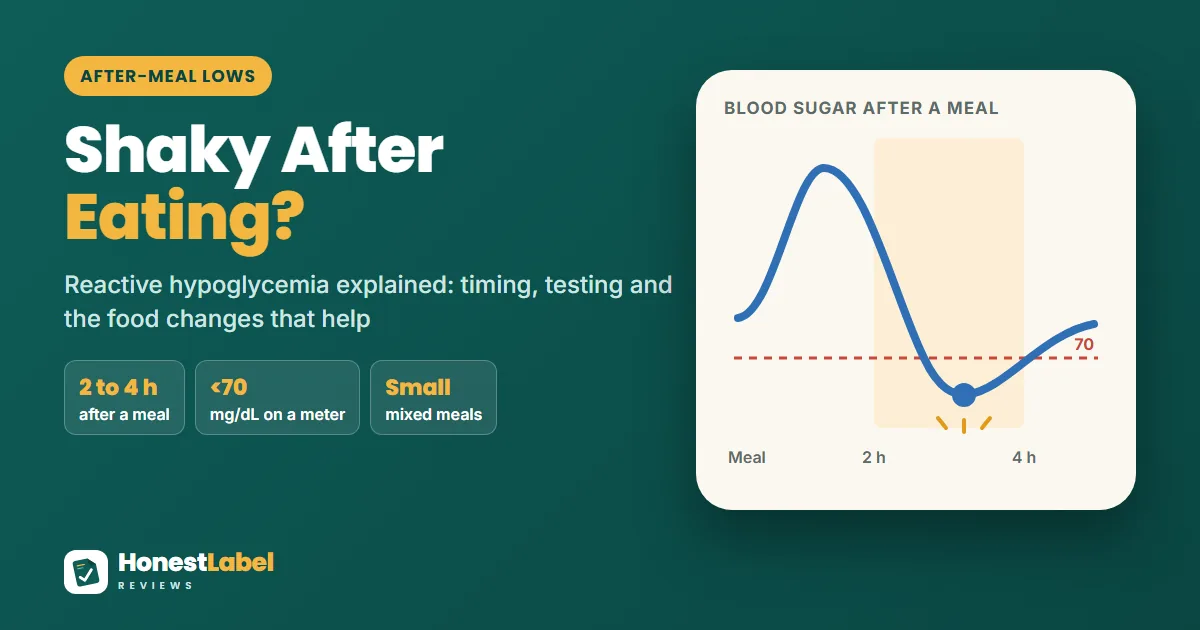
Reactive hypoglycemia is a drop in blood sugar that comes about 2 to 4 hours after a meal, often a carb-heavy one, causing shakiness, sweating, hunger or brain fog. A reading under 70 mg/dL during symptoms backs it up, but many people who feel this way test normal. Smaller mixed meals with protein and fiber help most people.
You eat a big bowl of pasta or a pastry and a sweet coffee, and a couple of hours later your hands shake, you feel sweaty and irritable, and you are suddenly starving again. Something sweet fixes it within minutes. That pattern sends a lot of people searching for answers, and “reactive hypoglycemia” is usually the term they land on.
This guide explains what is happening, why checking your blood sugar during an episode changes the picture, how it may connect to early insulin resistance, and the food changes that help. If you want the basics first, our pillar guide covers normal blood sugar ranges for fasting, after meals and A1C.
What is reactive hypoglycemia?
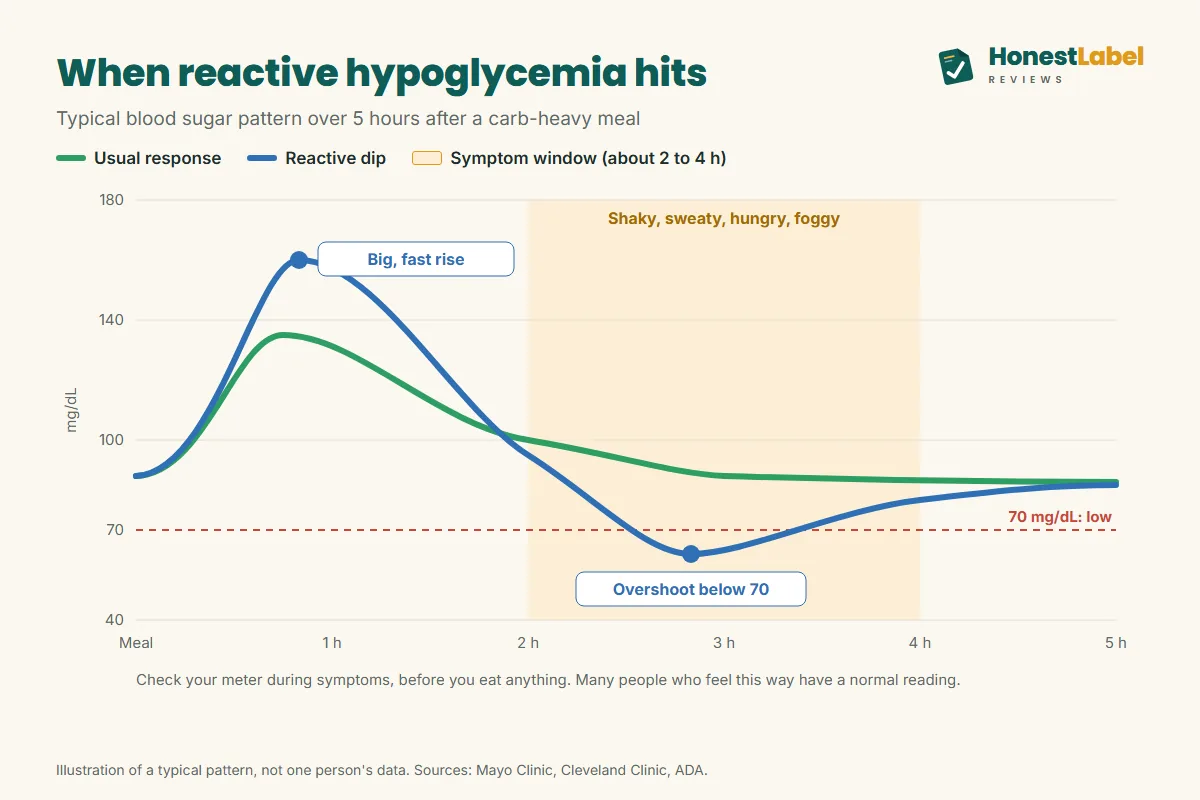
Reactive hypoglycemia, also called postprandial hypoglycemia, means low blood sugar that happens after eating rather then after a long gap without food. Mayo Clinic describes it as a drop that usually comes within four hours of a meal. Cleveland Clinic says it typically arrives about 2 hours after eating and sometimes up to 4 hours later.
Here is the usual explanation. A meal rich in fast carbs sends a lot of glucose into the blood quickly. The pancreas answers with insulin, and in some people that insulin response is a little too big or a little too late. Blood sugar is then pushed down past where it started. The body notices the drop and releases adrenaline, which is what causes most of the shaky, sweaty, heart-pounding feeling.
In people without diabetes, Mayo Clinic notes that the exact cause is often unclear. Most people with reactive hypoglycemia do not need medical treatment, but the diet changes below make a noticeable difference for many of them.
Symptoms 2 to 4 hours after eating
The symptoms are the same as any low, and they tend to arrive in the window after a meal when you would expect to feel settled. Cleveland Clinic lists these as common:
- Shaking or trembling
- Sweating and chills
- A faster heartbeat
- Dizziness or feeling lightheaded
- Strong hunger soon after eating
- Nervousness, anxiety or irritability
- Headache, nausea or weakness
- Trouble concentrating or brain fog
The episode usually passes by itself as the body releases stored glucose, and eating something speeds that up. Symptoms that go on to confusion, slurred speech or fainting are not typical of ordinary reactive hypoglycemia and need medical attention.
Why a home meter reading matters
Feeling shaky after a meal and having a measured low blood sugar often do not line up, as two studies show.
- In a study of a standard high-carb breakfast test, Brun and colleagues found blood sugar under 3.3 mmol/L (about 60 mg/dL) in 47.3 percent of people referred with suspected reactive hypoglycemia (Brun et al., 1995). The rest had symptoms without a clear low.
- An older study tested 26 patients with suspected after-meal lows. Ten had a low with symptoms during a sugary glucose drink test, but none of the nine who were retested with an ordinary mixed meal did (Buss et al., 1982).
Doctors sometimes call symptoms after meals with normal glucose “idiopathic postprandial syndrome”. The symptoms are real and may come from adrenaline, from how fast blood sugar is falling rather than how low it goes, or from something unrelated such as anxiety or caffeine. Without a reading, there is no way to know which one you have.
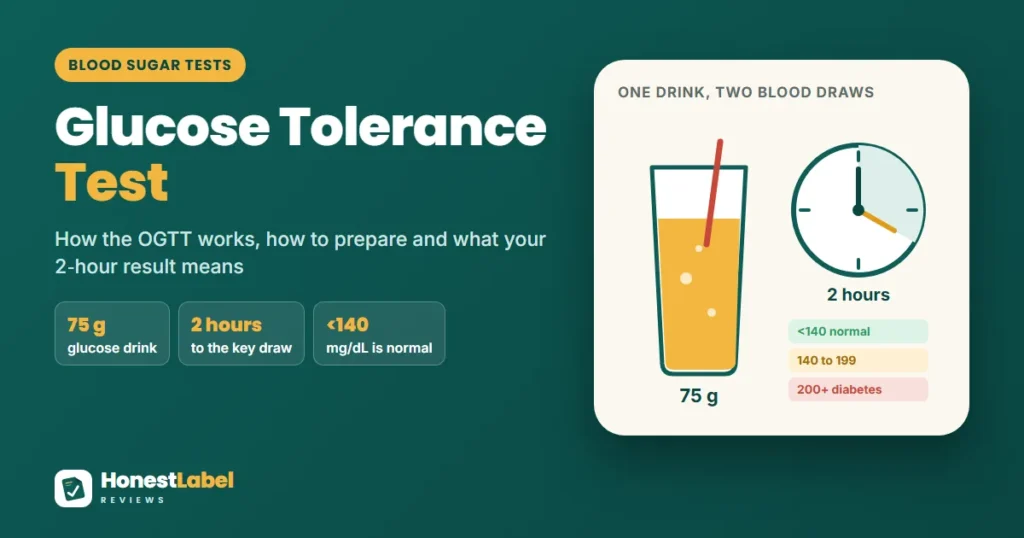
The Endocrine Society guideline on adult hypoglycemic disorders (Cryer et al., 2009) recommends a full workup only when Whipple’s triad is met: symptoms, a low glucose measured at that moment, and relief once sugar is raised. It also advises against using the oral glucose tolerance test to diagnose after-meal lows, because healthy people can dip on that sugary drink too.
How to check yourself at home
- Borrow or buy a standard finger-prick meter and practice using it on a normal day so the technique is easy when you feel unwell.
- When symptoms start, wash and dry your hands, then test before you eat anything. A reading taken after the juice tells you nothing.
- Write down the time, the reading, what you ate at the last meal and how long ago.
- Treat the symptoms if you need to, then note how quickly you felt better.
- Repeat for several episodes. Bring the log to your doctor.
A reading under 70 mg/dL during symptoms is a meaningful finding. Under about 55 to 60 mg/dL is the range researchers and doctors use to call it a true low in people without diabetes. A normal reading during symptoms is just as useful, because it points the search somewhere else. Keep in mind that meters are least precise at the low end, so one borderline number is a reason to keep logging rather than a diagnosis.
Some people use a continuous glucose monitor for a couple of weeks instead. Sensors can read low during sleep or when pressed against, so check any surprising sensor low with a finger stick.
The possible link to early insulin resistance
When muscle and liver cells respond poorly to insulin, the pancreas makes more of it to keep blood sugar in range. The NIDDK explains that this extra insulin can hold blood sugar normal for years before prediabetes shows up on tests. One theory is that in this early stage the insulin response after a meal is both late and oversized. It arrives after the glucose peak and keeps working once the glucose is gone, which drags blood sugar below the starting point a few hours later.
Reviews of the condition, such as Brun and colleagues (2000), describe several different mechanisms that can produce the same symptoms, and this is only one of them. Others include very high insulin sensitivity, which is more common in lean, active people, and a weaker glucagon response. So reactive hypoglycemia is not proof of insulin resistance, and plenty of people with it never develop diabetes.
Still, it is a sensible prompt to look. If you have after-meal dips plus a growing waistline, a family history of type 2 diabetes or high triglycerides, ask your doctor for a fasting glucose and A1C. Our guide to the early signs of insulin resistance lists the other clues and the tests that confirm it.
What the evidence does and does not show
| Claim | How strong is the evidence? |
|---|---|
| Symptoms usually come 2 to 4 hours after a meal | Consistent across clinic guidance (Mayo Clinic, Cleveland Clinic) |
| Many people with symptoms have normal glucose when tested | Shown in several small studies |
| Fewer refined carbs and smaller mixed meals reduce episodes | Standard clinical advice; few formal trials |
| Reactive hypoglycemia is an early sign of insulin resistance | Possible in some people; not proven as a general rule |
| A supplement can prevent episodes | No good evidence |
Diet changes that help
The aim is a smaller, slower rise in blood sugar after meals, so the insulin response is smaller too and there is less to overshoot. Mayo Clinic and Cleveland Clinic give very similar advice.
1. Eat smaller meals more often
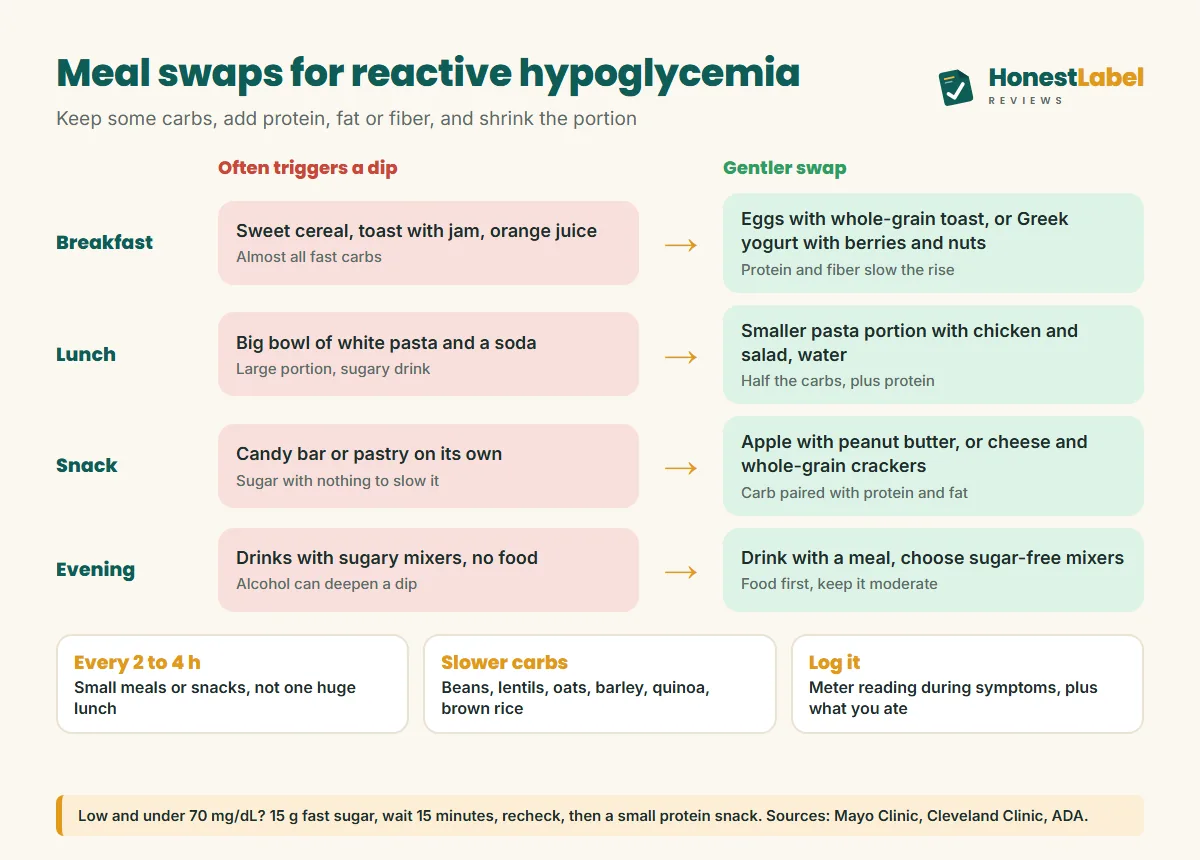
Cleveland Clinic suggests small meals or snacks every 2 to 4 hours, and Mayo Clinic suggests no more than about three hours apart during the day. Three moderate meals plus one or two planned snacks works for most people. A huge lunch followed by nothing until dinner is the classic setup for an afternoon crash.
2. Pair every carb with protein, fat or fiber
Protein and fat slow how fast the stomach empties, so glucose reaches the blood more gradually. An apple with peanut butter, crackers with cheese, or yogurt with nuts is gentler than any of those carbs eaten alone.
3. Swap refined carbs for slower ones
Cleveland Clinic names white bread, white rice, white pasta, potatoes and bakery items (cakes, pastries, pancakes, waffles) as common triggers, along with candy, sweet drinks, honey and table sugar. Good swaps include beans and lentils, oats, barley, quinoa, brown or wild rice, sprouted-grain bread and sweet potatoes with the skin. Our list of foods that spike blood sugar has more side-by-side swaps.
4. Go easy on sugary drinks
Juice, soda and sweetened coffee drinks deliver a lot of sugar in a few minutes with nothing to slow it. They are the one place where sugar is useful, for treating a confirmed low, and the worst choice as part of a meal.
5. Don’t drink alcohol on an empty stomach
Alcohol stops the liver from releasing glucose for a while, so it can deepen a dip. Cleveland Clinic advises drinking with food. A sugary mixer on an empty stomach is the worst combination.
6. Watch the start of the day
Many people notice their worst episodes mid-morning after a sweet breakfast. Eggs, Greek yogurt or oats with nuts in place of cereal, toast with jam and juice often makes the biggest single difference.
Give the changes two to three weeks and keep logging your symptoms. If episodes become rare, you have your answer. If nothing changes, or your meter keeps showing normal numbers during symptoms, that is useful too, and worth discussing with a doctor.
What to do during an episode
If you feel shaky and your meter reads under 70 mg/dL, follow the ADA’s 15-15 rule: take 15 grams of fast sugar, such as half a cup of juice or 3 to 4 glucose tablets, wait 15 minutes and check again. Then eat a small snack with protein so you do not rebound into another dip. If the reading is normal, a balanced snack is a better choice than straight sugar, since a big sugar hit can start the cycle over.
Safety: who should be careful
- People who take insulin or sulfonylureas. A low after meals on these drugs is a medication effect. Ask your doctor to review the dose before you change your diet.
- Anyone who has had gastric bypass or other bariatric surgery. After-meal lows in this group can be more severe and need specialist care.
- Pregnant women. Blood sugar targets and nutrition needs change in pregnancy, so plan any diet change with your midwife or doctor.
- People with kidney disease. Adding more protein to each meal may not suit you, so check with your kidney team first.
- Anyone with a history of disordered eating. Frequent eating schedules and food tracking can be triggering. A dietitian can help you accommodate the advice safely.
No supplement has good evidence for preventing reactive hypoglycemia. Products sold to lower blood sugar could in theory make an after-meal dip worse, so skip them unless your doctor has a separate reason to suggest one.
When to see a doctor
Reactive hypoglycemia on its own is usually mild, but some lows that look like it have other causes. See a doctor if you:
- Get symptoms while fasting, overnight or first thing in the morning, rather than only after meals
- Have a meter reading under 55 mg/dL, or several readings under 70 mg/dL with symptoms
- Have confusion, blurred vision, slurred speech or have fainted during an episode
- Have had weight-loss surgery and the symptoms are new
- Are losing weight without trying or feel unwell between episodes
- Have risk factors for type 2 diabetes and have not been tested recently
Your doctor may order a fasting glucose and A1C, and, if your log shows real lows, a mixed-meal tolerance test. Cleveland Clinic describes this as a drink containing protein, fat and sugar, with blood sugar checked several times over the next few hours. MedlinePlus and the NIDDK both have plain guides to low blood sugar symptoms if you want to compare yours. Call 911 for anyone who cannot be woken, has a seizure or cannot swallow safely.
Frequently asked questions
Can you have reactive hypoglycemia without diabetes?
Yes. Most people with reactive hypoglycemia do not have diabetes. Mayo Clinic notes that in people without diabetes the cause is often unclear. It is worth getting a fasting glucose and A1C to rule out prediabetes.
What is the best breakfast for reactive hypoglycemia?
Something with protein and fiber and only modest fast carbs. Eggs with whole-grain toast, plain Greek yogurt with berries and nuts, or oats cooked with milk and topped with seeds are all good options. Skip juice and sweet cereal on there own.
Is reactive hypoglycemia a sign of prediabetes?
It can be in some people, because a late, oversized insulin response is one possible mechanism of early insulin resistance. It is not a reliable sign by itself, though, so the only way to know is a fasting glucose or A1C test.
Why do I feel shaky after eating if my blood sugar is normal?
Adrenaline released as blood sugar falls quickly, caffeine, anxiety and a large meal can all cause shakiness without a true low. Studies of people referred for suspected reactive hypoglycemia found that many had normal readings during symptoms. Logging readings during episodes helps your doctor sort it out.
The bottom line
Reactive hypoglycemia is a dip in blood sugar a few hours after eating, usually after a meal heavy in fast carbs. It is common to feel the symptoms and less common to have a measured low, so a meter reading taken during an episode is the most useful thing you can do. Smaller, more frequent meals that pair carbs with protein, fat and fiber solve the problem for many people. If you believe the dips are getting worse, or they come with fasting lows or fainting, see a doctor and bring your log.
Sources
- Mayo Clinic. Reactive hypoglycemia: What can I do?
- Cleveland Clinic. How to Treat Reactive Hypoglycemia; Hypoglycemia (Low Blood Sugar).
- National Institute of Diabetes and Digestive and Kidney Diseases (NIH). Insulin Resistance & Prediabetes; Low Blood Glucose (Hypoglycemia).
- MedlinePlus (US National Library of Medicine). Hypoglycemia.
- American Diabetes Association. Hypoglycemia (Low Blood Glucose).
- Cryer PE, Axelrod L, Grossman AB, et al. Evaluation and management of adult hypoglycemic disorders: an Endocrine Society clinical practice guideline. Journal of Clinical Endocrinology & Metabolism, 2009. PubMed.
- Brun JF, Fedou C, Mercier J. Postprandial reactive hypoglycemia. Diabetes & Metabolism, 2000. PubMed.
- Brun JF, et al. Evaluation of a standardized hyperglucidic breakfast test in postprandial reactive hypoglycaemia. Diabetologia, 1995. PubMed.
- Buss et al. Mixed meal tolerance test and reactive hypoglycemia. Hormone and Metabolic Research, 1982. PubMed.
Medical disclaimer: This article is for general information and is not medical advice. It does not replace a diagnosis or treatment from your doctor. If you have diabetes or take medication that affects blood sugar, talk to your healthcare provider before changing your diet, exercise or supplements.