Last reviewed: November 2026 · Sources: American Diabetes Association, CDC, NIH (NIDDK), MedlinePlus and peer-reviewed studies (listed at the end)
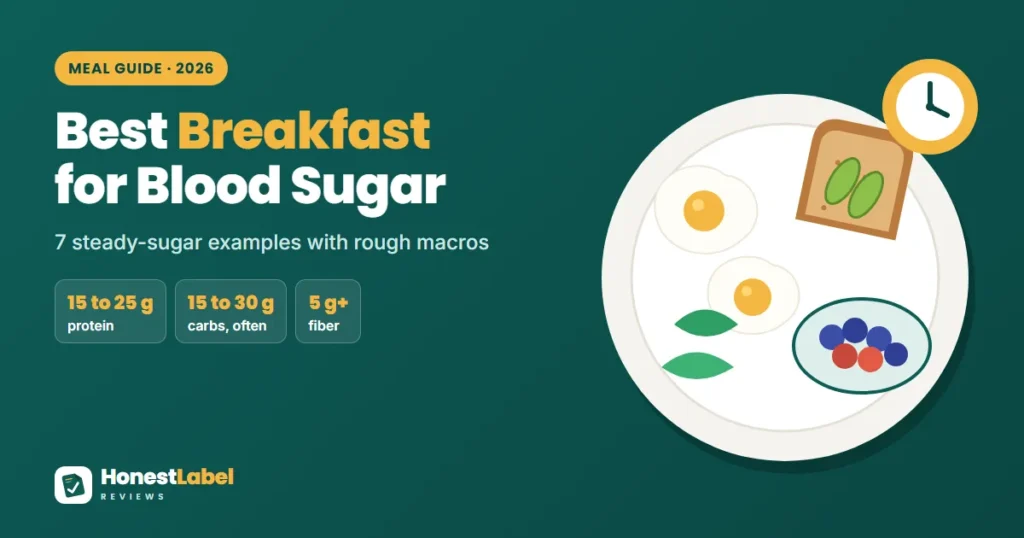
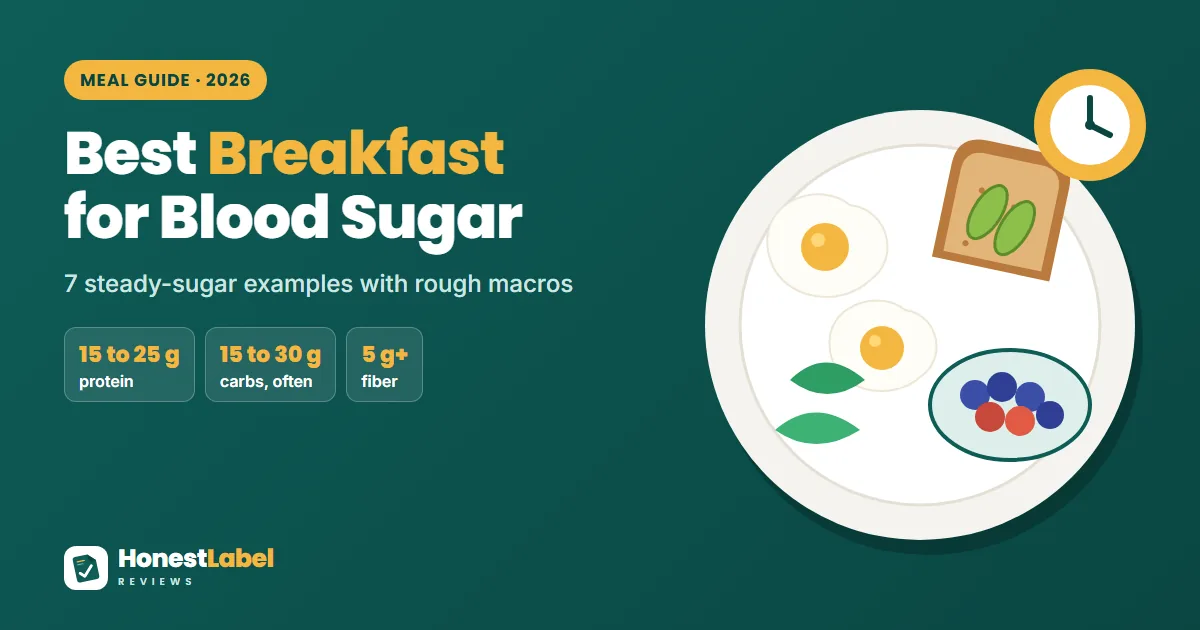
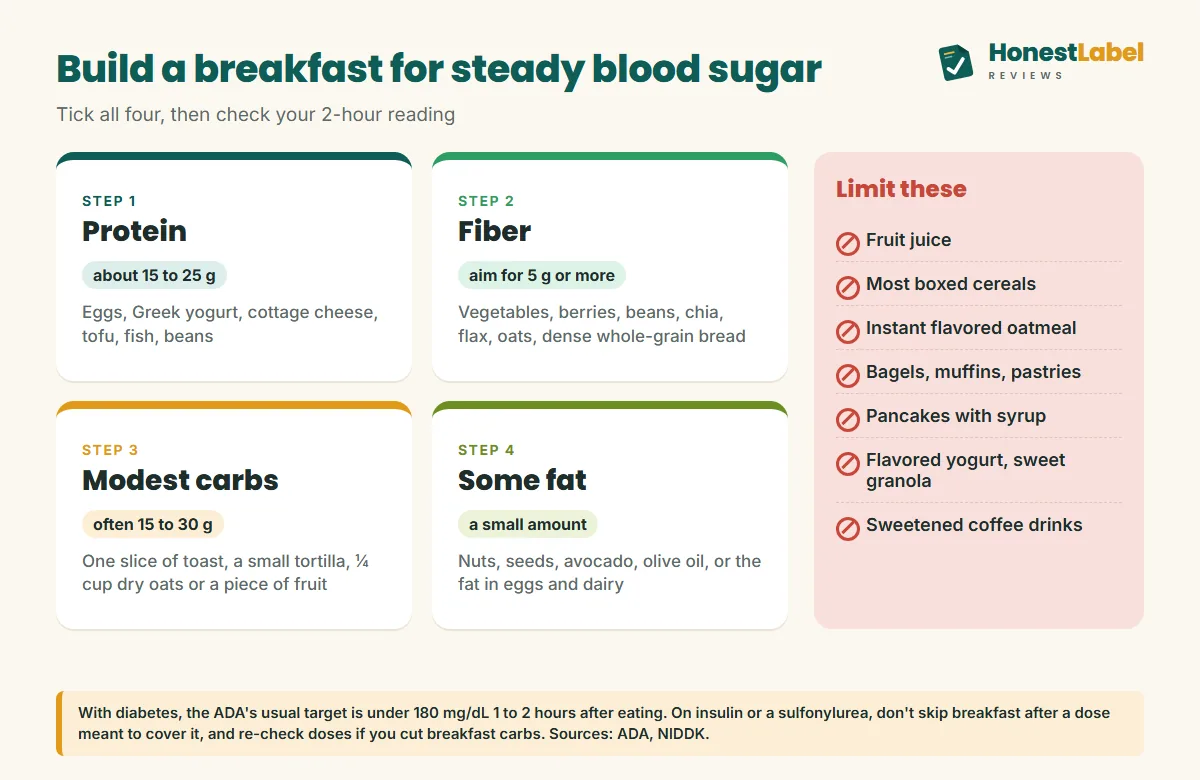
The best breakfast for stable blood sugar combines protein (about 15 to 25 grams), fiber from vegetables, beans, whole grains or berries, some healthy fat, and a modest carb portion, often 15 to 30 grams. Eggs with vegetables and whole-grain toast, plain Greek yogurt with berries and nuts, or steel-cut oats with peanut butter all fit the pattern.
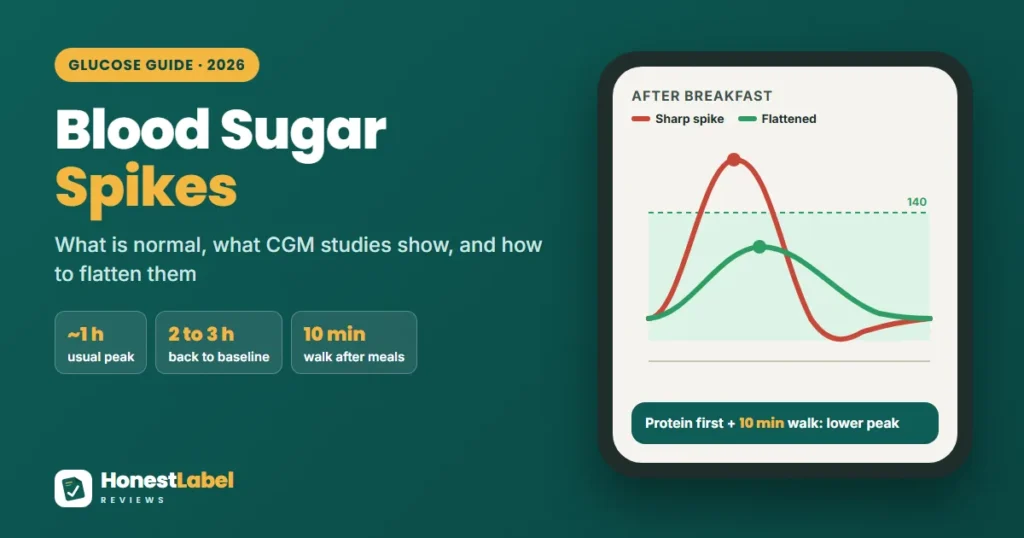
Breakfast is the meal where many people with diabetes see their highest after-meal numbers, even when they eat the same amount of carbohydrate as at lunch. The usual target is to stay inside the normal blood sugar ranges, or under 180 mg/dL one to two hours after eating if you have diabetes, as the American Diabetes Association suggests for most adults. This guide explains why the morning meal behaves differently, gives seven example breakfasts with rough numbers, and covers the honest answer on skipping breakfast.
Why breakfast is a tricky meal for blood sugar
Two things work against you in the morning.
First, hormones. Cortisol and growth hormone rise in the early hours and tell the liver to release glucose, and they also make the body a little more resistant to insulin for a few hours. That is the dawn phenomenon, and we explain it fully in our guide to high blood sugar in the morning. The practical result is that the same bowl of cereal can push your numbers higher at 8 a.m. than it would at 1 p.m.
Second, the typical Western breakfast is the most carb-heavy meal of the day. Cereal, toast, pastries and juice are fast carbs with little protein or fiber. Put those foods on top of morning insulin resistance and a big spike is no surprise. If you feel tired or shaky a couple of hours later, that may be the dip after the spike, which we cover in our guide to reactive hypoglycemia.
The second-meal effect: does breakfast shape the rest of the day?
One meal can change how your body handles the next one, which researchers call the second-meal effect. In early work by Wolever, Jenkins and colleagues, a low-glycemic-index evening meal led to a smaller blood sugar rise after the next morning’s breakfast (Wolever et al., 1988). Slow-digesting carbs and fiber seem to drive it, though the exact mechanism is still debated.
The breakfast side of this is more limited. A crossover study in 22 adults with type 2 diabetes found that on days they skipped breakfast, their blood sugar after lunch and dinner was higher than on days they ate breakfast, with a weaker insulin response (Jakubowicz et al., 2015). It was small and short, so we would not overstate it, but it fits the idea that a balanced breakfast can make lunch easier on your blood sugar.
No single breakfast fixes the whole day. The effect is modest, and what you eat matters as much as whether you eat.
What makes a good breakfast for blood sugar
The research points the same way as standard diabetes nutrition advice from the NIDDK and the ADA. Build the plate from four parts:
- Protein, roughly 15 to 25 grams. Eggs, Greek yogurt, cottage cheese, tofu, fish or beans. Protein barely raises blood sugar and slows how fast the carbs are absorbed.
- Fiber. Vegetables, berries, beans, chia, flax, oats or dense whole-grain bread. Aim for at least 5 grams at breakfast.
- A modest carb portion. Many of our examples land between about 15 and 30 grams of carbohydrate. Your own target depends on your size, activity and medication.
- Some fat. Nuts, seeds, avocado, olive oil or the fat already in eggs and dairy. It adds staying power.
There is one small trial worth knowing about. In 23 adults with type 2 diabetes, a very low-carb breakfast (an omelet) led to lower after-meal peaks and less up-and-down movement in glucose over the next 24 hours than a low-fat breakfast built around oatmeal and fruit, measured with continuous glucose monitors (Chang et al., 2019). The study was short and each diet ran for one day, so it only shows a short-term direction. Many people see the same thing on their own meter.
7 example breakfasts for stable blood sugar
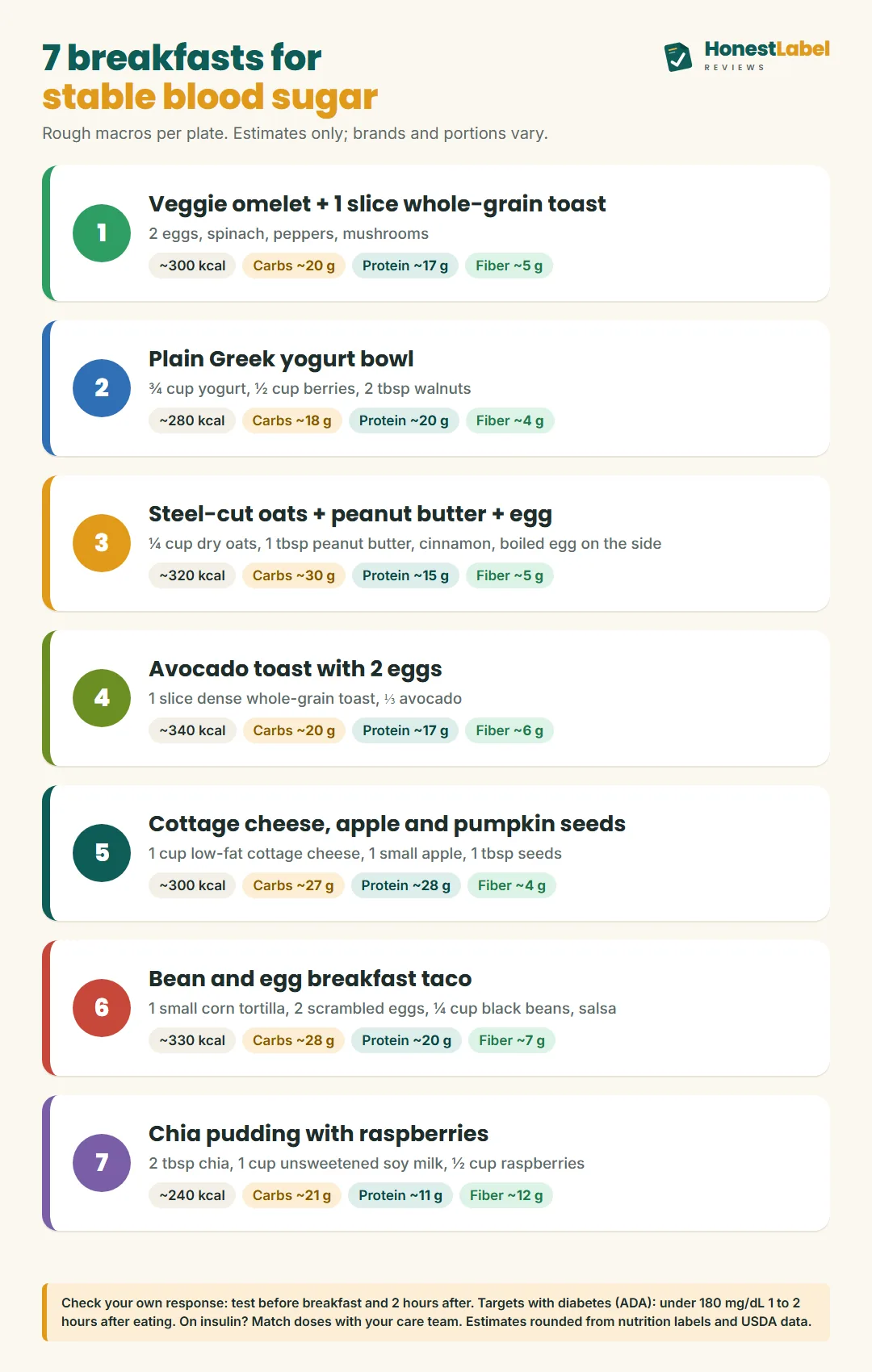
The numbers below are rough estimates for the portions listed, rounded from standard nutrition labels and USDA food data. Brands and portion sizes vary, so check the labels of what you buy.
| Breakfast | Calories | Carbs | Protein | Fiber |
|---|---|---|---|---|
| 1. Veggie omelet (2 eggs, spinach, peppers, mushrooms) with 1 slice whole-grain toast | ~300 | ~20 g | ~17 g | ~5 g |
| 2. Plain Greek yogurt (¾ cup) with ½ cup berries and 2 tbsp walnuts | ~280 | ~18 g | ~20 g | ~4 g |
| 3. Steel-cut oats (¼ cup dry) with 1 tbsp peanut butter, cinnamon and a boiled egg on the side | ~320 | ~30 g | ~15 g | ~5 g |
| 4. Whole-grain toast (1 slice) with ⅓ avocado and 2 eggs | ~340 | ~20 g | ~17 g | ~6 g |
| 5. Cottage cheese (1 cup, low fat) with a small sliced apple and 1 tbsp pumpkin seeds | ~300 | ~27 g | ~28 g | ~4 g |
| 6. Breakfast taco: 1 small corn tortilla, 2 scrambled eggs, ¼ cup black beans, salsa | ~330 | ~28 g | ~20 g | ~7 g |
| 7. Chia pudding (2 tbsp chia, 1 cup unsweetened soy milk) with ½ cup raspberries | ~240 | ~21 g | ~11 g | ~12 g |
Notes on each example
- The omelet is the most reliable choice for people whose numbers run high after breakfast. Skip the toast if you need fewer carbs.
- Greek yogurt must be plain. Flavored yogurt can carry two to three teaspoons of added sugar or more per pot.
- Steel-cut or rolled oats work for many people, but oats are the breakfast where people’s responses differ most. Test it with a meter before you make it a daily habit.
- Avocado toast works best on dense whole-grain or rye bread with visible grains. Soft “wheat” bread behaves much like white bread.
- Cottage cheese has the most protein of the seven.
- Chia pudding has the most fiber but less protein. Stir in a few spoonfuls of Greek yogurt if you get hungry before lunch. You can make it the night before so it is ready tomorrow morning.
Short on time? A hard-boiled egg or two with a piece of fruit needs no cooking. Leftovers from dinner, like vegetables and chicken or a bowl of lentil soup, also make a good breakfast. It may feel weird at first, but your blood sugar does not care about the clock.
Breakfast foods to limit or avoid
Our foods that spike blood sugar guide gives the GI ranges and swaps for these.
- Fruit juice and smoothies made mostly from fruit, which deliver a lot of sugar with little fiber
- Most boxed breakfast cereals, including many sold as “whole grain” or “healthy”
- Instant flavored oatmeal packets
- Bagels, white toast, muffins, croissants and pastries
- Pancakes and waffles with syrup
- Flavored yogurts and granola with added sugar
- Sweetened coffee drinks and chai lattes
You don’t have to give these up forever. If you want pancakes on a Sunday, have a smaller stack, add eggs or yogurt on the side, and take a 10-minute walk afterwards.
Is it better to skip breakfast?
This is where the evidence is mixed, and we want to be truly honest about it.
On one side, large observational studies link skipping breakfast with a higher risk of type 2 diabetes. A meta-analysis of these studies found about a 20 percent higher risk in people who usually skipped breakfast (Bi et al., 2015). But observational studies can’t prove cause. People who skip breakfast are also more likely to smoke, sleep poorly, eat late at night and have other habits that raise diabetes risk on their own.
On the other side, controlled trials tell a less dramatic story. A 2019 BMJ review of randomized trials found that eating breakfast did not help with weight loss, and breakfast eaters actualy ate slightly more calories in total (Sievert et al., 2019). Some people drop breakfast as part of time-restricted eating and still manage their blood sugar well.
Our reading of the evidence:
- If you have type 2 diabetes and your numbers after lunch and dinner are hard to control, eating a protein-rich breakfast is a reasonable experiment, given the Jakubowicz findings above.
- If you have no diabetes, feel fine without breakfast and don’t overeat later, there is no strong evidence that you must eat it.
- If you take insulin or a sulfonylurea, skipping breakfast changes how your medicine works, so plan it with your doctor. See the next section.
The best way to find your own answer is to check your blood sugar. Test before breakfast and two hours after, and compare a few days with breakfast to a few days without. Keep going until you have atleast three days of each. Your own numbers will tell you more than any study average.
Tips if you use insulin or diabetes pills that cause lows
Breakfast needs extra planning if you take insulin or a sulfonylurea such as glipizide, glyburide or glimepiride, becuase those medicines lower blood sugar whether you eat or not.
- Don’t skip breakfast after taking a dose meant to cover it. Mealtime insulin or a morning sulfonylurea with no food is a common cause of lows. If you want to change your breakfast pattern, plan it with your care team first.
- Keep breakfast carbs fairly consistent if you use fixed insulin doses. Big day-to-day swings in carbs make doses harder to match.
- Ask about your insulin-to-carb ratio at breakfast. Many people who count carbs need a different ratio in the morning because of morning insulin resistance. Only change ratios with your diabetes team.
- Ask about timing. Some people do better taking rapid-acting insulin a little before eating. How early is something your care team should set for you.
- Re-check doses if you switch to lower-carb breakfasts. Moving from cereal to an omelet can cut breakfast carbs by half or more, and the same insulin dose may then cause a low.
- Carry fast-acting sugar. If you go under 70 mg/dL, follow the ADA’s 15-15 rule: 15 grams of fast carbs, then re-check in 15 minutes.
- Check before driving or morning exercise, especially if breakfast was small or late.
Who should be careful
- Pregnancy. Pregnant women, especially those with gestational diabetes, often receive specific breakfast guidance from their care team, sometimes with smaller carb portions in the morning. Follow that plan.
- Kidney disease. High-protein breakfasts and foods rich in potassium or phosphorus, such as dairy, beans and nuts, may need limits. Ask a renal dietitian.
- Children and teens with diabetes. They need enough carbohydrate to grow, so their breakfast plan comes from their pediatric team.
- Older adults who eat very little in the morning and take glucose-lowering drugs are at higher risk of lows.
- Anyone with a history of eating disorders should be wary of strict food rules and is better off working with a dietitian.
When to see a doctor
Talk to your doctor if you:
- Regularly see readings over 180 mg/dL one to two hours after breakfast, if you have diabetes
- Have no diabetes diagnosis but see over 140 mg/dL two hours after meals, or a fasting reading of 100 mg/dL or higher, on more than one day
- Get shaky, sweaty or confused a few hours after breakfast, or measure under 70 mg/dL
- Want to stop eating breakfast while on insulin or a sulfonylurea
- Have unexplained weight loss, constant thirst or frequent urination
Get emergency help for a reading under 54 mg/dL that does not come up with treatment, confusion or fainting, or very high readings with vomiting or fast, deep breathing. The CDC estimates that 40.1 million people in the US have diabetes and more then 1 in 4 of them don’t know it, so new symptoms are always worth a test.
Frequently asked questions
What is the best breakfast for diabetics?
A breakfast built around protein and fiber with a modest carb portion, such as eggs with vegetables and a slice of whole-grain toast, or plain Greek yogurt with berries and nuts. The best one for you is the one that keeps your two-hour reading in your target range.
Is oatmeal a good breakfast for blood sugar?
Steel-cut or rolled oats can be, in a moderate portion with protein and fat added, such as nuts, seeds or an egg on the side. Instant flavored oatmeal raises blood sugar much faster. Responses vary a lot between people, so check yours with a meter.
Why is my blood sugar higher after breakfast than after other meals?
Morning hormones make the body more resistant to insulin for a few hours after waking, and typical breakfast foods are high in fast carbs. Together they push the after-breakfast peak higher than the same food would later in the day.
Are eggs good for people with diabetes?
Eggs have almost no carbohydrate and barely raise blood sugar. Most people with diabetes can include them as part of a balanced diet. If you have high LDL cholesterol or heart disease, ask your doctor how many eggs a week suit you.
The bottom line
A breakfast that keeps blood sugar steady pairs protein and fiber with a modest carb portion and some fat. Eggs, plain Greek yogurt, cottage cheese, beans, berries and intact oats are the easiest building blocks, while juice, cereal, pastries and sweet coffee drinks are the main ones to cut back. Whether you should eat breakfast at all is less settled than many headlines suggest, so let your own meter readings guide you, and always plan any change with your care team if you take insulin or medicines that can cause lows. The examples above can accommodate most tastes, and a week or two of testing is usually enough to find what works for you.
Sources
- American Diabetes Association. Checking Your Blood Glucose; Hypoglycemia (Low Blood Glucose); Understanding Carbs.
- Centers for Disease Control and Prevention. National Diabetes Statistics Report.
- National Institute of Diabetes and Digestive and Kidney Diseases (NIH). Diabetes Diet, Eating, & Physical Activity.
- Wolever TM, Jenkins DJ, et al. Second-meal effect: low-glycemic-index foods eaten at dinner improve subsequent breakfast glycemic response. American Journal of Clinical Nutrition, 1988. PubMed.
- Jakubowicz D, et al. Fasting until noon triggers increased postprandial hyperglycemia and impaired insulin response after lunch and dinner in individuals with type 2 diabetes: a randomized clinical trial. Diabetes Care, 2015. PubMed.
- Chang CR, Francois ME, Little JP. Restricting carbohydrates at breakfast is sufficient to reduce 24-hour exposure to postprandial hyperglycemia and improve glycemic variability. American Journal of Clinical Nutrition, 2019. PubMed.
- Bi H, et al. Breakfast skipping and the risk of type 2 diabetes: a meta-analysis of observational studies. Public Health Nutrition, 2015. PubMed.
- Sievert K, et al. Effect of breakfast on weight and energy intake: systematic review and meta-analysis of randomised controlled trials. BMJ, 2019. PubMed.
Medical disclaimer: This article is for general information and is not medical advice. It does not replace a diagnosis or treatment from your doctor. If you have diabetes or take medication that affects blood sugar, talk to your healthcare provider before changing your diet, exercise or supplements.