Last reviewed: November 2026 · Sources: American Diabetes Association, NIH (NHLBI, NIDDK), MedlinePlus, Mayo Clinic and peer-reviewed studies (listed at the end)
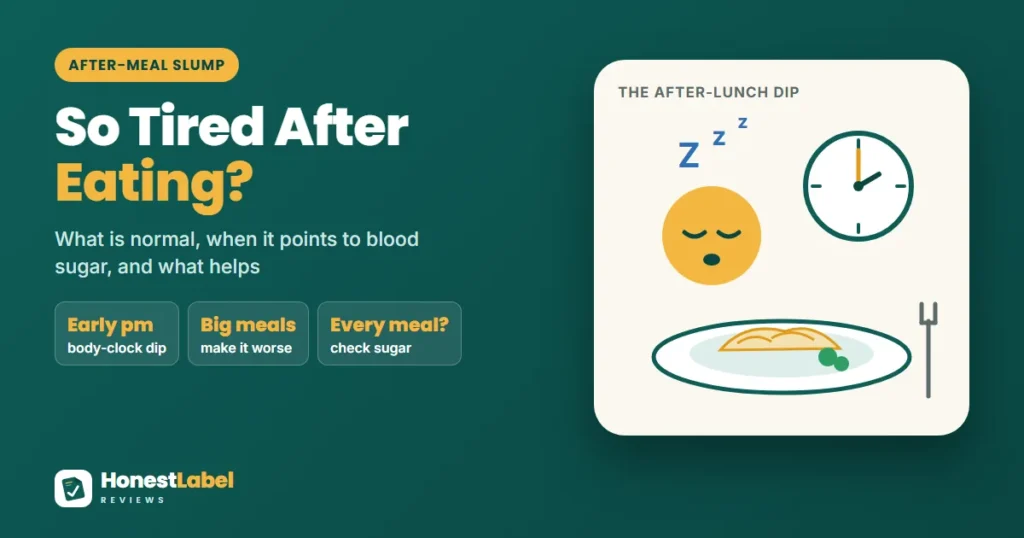
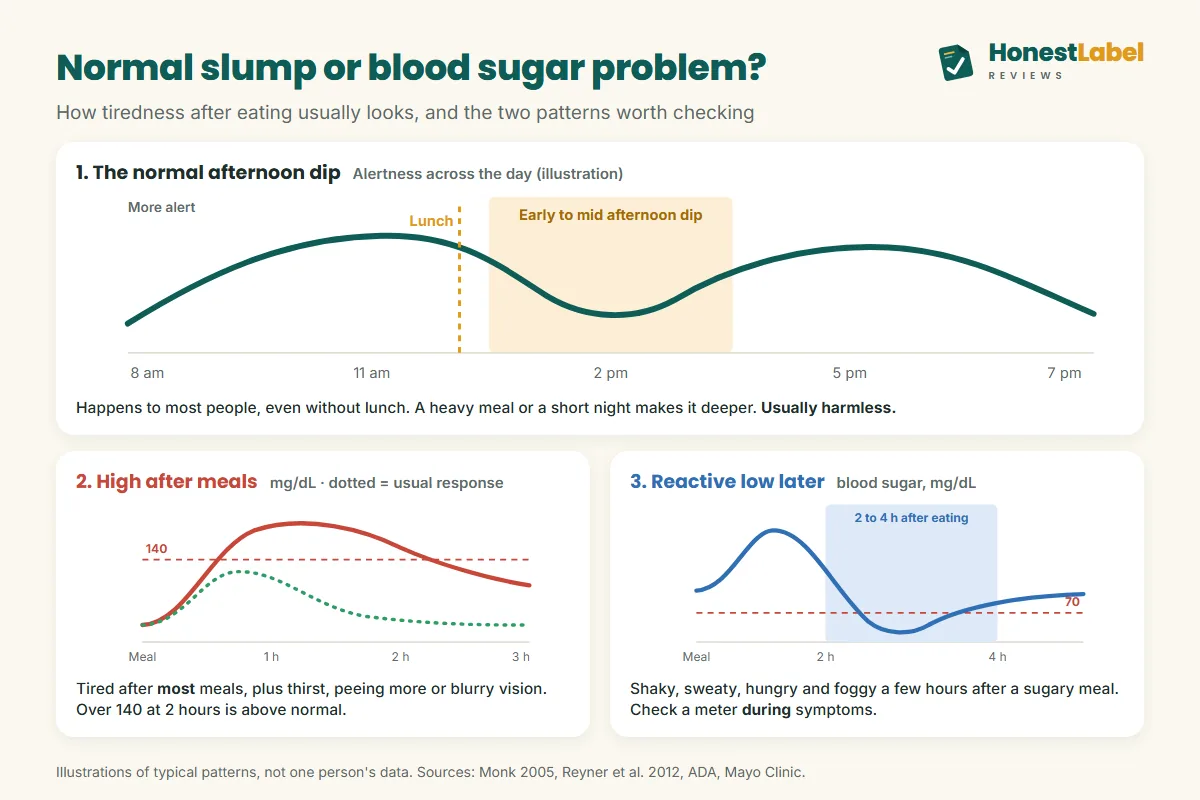
Feeling tired after eating is usually normal. Your body clock has a built-in dip in alertness in the early afternoon, and large meals and carb-heavy meals can deepen it. Tiredness after most meals, especially with thirst, frequent urination, or shakiness 2 to 4 hours later, is worth a blood sugar check.
People call the heavy-eyed feeling after a big lunch a food coma, and doctors call it postprandial somnolence. Most of the time it is harmless. Sometimes, though, it is one of the early clues that blood sugar is not being handled well. This guide explains what is normal, what isn’t, and what you can change. If you want the reference numbers first, our guide to normal blood sugar ranges lists them all.
What we know (and don’t know) about the food coma
The research on sleepiness after meals is smaller than you might expect. Most studies are short lab experiments in about a dozen healthy young men, so the results may not apply to everyone. Some findings are fairly solid, while others are still theory.
The afternoon dip happens even without lunch
Your body runs on a roughly 24-hour clock that controls alertness. Besides the big drop at night, most people have a smaller dip in the early to mid afternoon. Sleep researcher Timothy Monk describes this “post-lunch dip” as partly built into the body clock, since it shows up in studies even when people skip lunch (Monk, 2005). So if you eat lunch at 1 p.m. and feel sleepy at 2 p.m., the meal may get the blame for something your clock was going to do anyway.
Eating a solid meal adds to it
In a small 1997 study, 10 healthy men took a series of naps in a sleep lab after a solid meal, a liquid meal or the same volume of water. After the solid meal they fell asleep faster than after water. The type of meal (high fat, high carb or mixed) made no measurable difference in that study (Orr et al., 1997).
Meal size seems to matter
A UK driving simulator study gave 12 young men who had slept only 5 hours either a light lunch of about 300 calories or a heavy lunch of about 920 calories. On a 2-hour afternoon drive, the heavy lunch led to more sleepy lane drifting, but only after the first 30 minutes (Reyner et al., 2012). The authors noted that the afternoon dip is mostly driven by the body clock and made worse by poor sleep. A heavy lunch added to sleepiness that was already there.
A big carb load may play a part
One small trial in 12 healthy men found that a high glycemic index rice meal eaten 4 hours before bed shortened the time it took to fall asleep, compared with a low glycemic index rice meal: about 9 minutes versus 17.5 minutes (Afaghi et al., 2007). That fits with the common experience of a big bowl of white pasta or rice making people drowsy. It is a single small study about sleep at night, though, and other studies have found no difference between meal types.
The proposed mechanisms
Researchers have a few theories, and none is proven in people:
- Tryptophan and serotonin. Carb-rich meals help more of the amino acid tryptophan reach the brain, where it is used to make serotonin and melatonin.
- Orexin. Orexin is a brain chemical that keeps you awake. In mouse brain tissue, a rise in glucose switched off orexin cells (Burdakov et al., 2006, listed in the sources). Nobody knows yet whether the same thing happens after a normal human meal.
- Rest and digest. After a meal the nervous system shifts toward digestion, and gut hormones released by food may affect alertness.
When tiredness after eating points to blood sugar
Ordinary sleepiness after lunch is mild, wears off as the afternoon goes on, and doesnt happen after every small meal. Two blood sugar patterns can feel different.
High blood sugar after meals
When the body can’t move glucose into cells well, because of insulin resistance, prediabetes or diabetes, blood sugar climbs higher after a meal and stays up longer. The American Diabetes Association lists fatigue along with thirst, frequent urination and blurry vision among the signs of high blood sugar.
Clues that point this way:
- You feel wiped out after most meals, even small ones
- You are often thirsty and pee more than usual, including at night
- Your vision blurs on and off, or cuts heal slowly
- You have risk factors such as a family history, a large waist, PCOS or gestational diabetes in the past
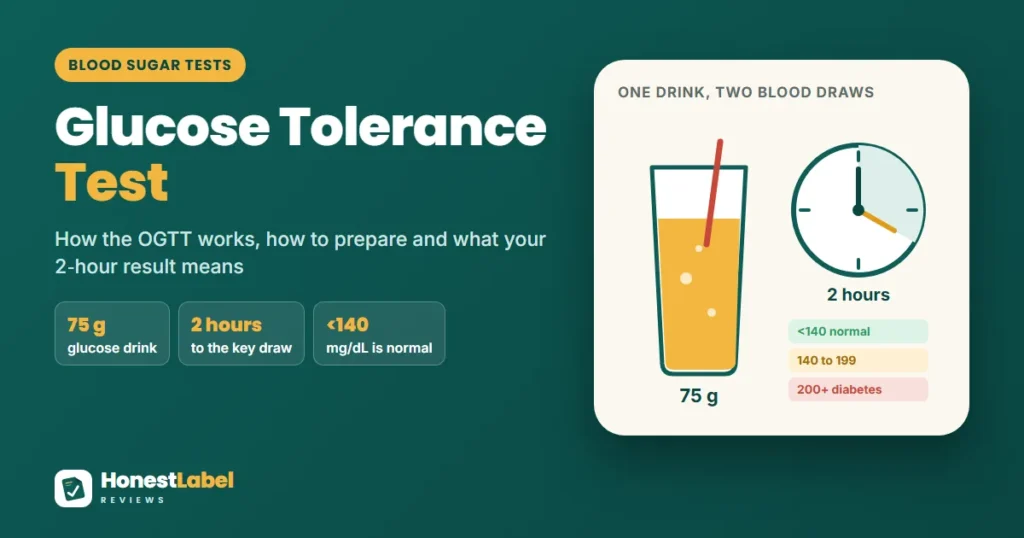
For a person without diabetes, blood sugar two hours after a meal is usually under 140 mg/dL. Our guide to normal blood sugar after eating explains how to check it at home. If a reading comes back high and you are not sure what to do, see what to do if your blood sugar is high.
This is not a rare situation. The CDC estimates that 115.2 million US adults have prediabetes and 8 in 10 of them don’t know it. Of the 40.1 million people with diabetes, more than 1 in 4 are undiagnosed. Tiredness alone proves nothing, but it is a fair reason to ask for a test.
A reactive low a few hours later
The other pattern is a dip. Some people get a large insulin response to a sugary or starchy meal, and their blood sugar drops below normal 2 to 4 hours later. Mayo Clinic lists hunger, shakiness, sweating, anxiety and lightheadedness as the usual symptoms. Tiredness and brain fog can come with them.
The timing is the main clue. A food coma usualy starts soon after eating. A reactive low tends to arrive later, often mid-afternoon after a sugary breakfast or a big pasta lunch, and eating something quickly makes it better. A meter reading taken during symptoms is the only way to know, since many people who feel this way have normal numbers. Our full guide to reactive hypoglycemia covers how to test for it.
Other causes of tiredness after eating
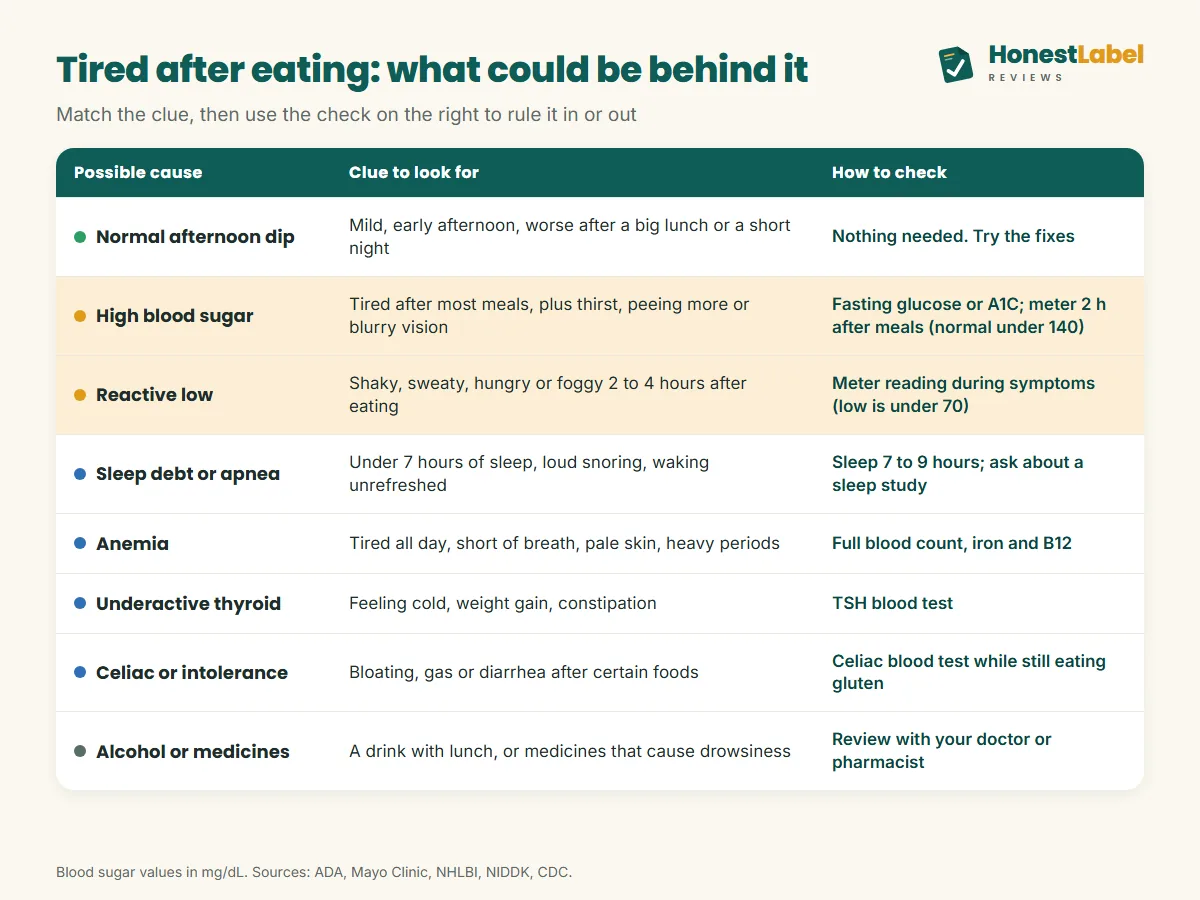
Blood sugar is only one possible link. If you are tired after meals and also tired at other times, one of these may be the bigger factor.
- Sleep debt. For many people this is the main culprit. The driving study above showed how a short night makes the afternoon dip worse. The NHLBI recommends 7 to 9 hours for adults. Loud snoring or waking unrefreshed can mean sleep apnea, which causes daytime sleepiness.
- Anemia. Low iron or low vitamin B12 means less oxygen reaches your tissues. The NHLBI lists tiredness and weakness as common symptoms, along with shortness of breath and pale skin. Heavy periods and a plant-only diet without B12 are common reasons.
- An underactive thyroid. NIDDK lists fatigue, weight gain, feeling cold and constipation as signs of hypothyroidism. A simple blood test (TSH) checks for it.
- Food intolerance and celiac disease. If you feel tired along with bloating, gas or diarrhea after certain foods, the food itself may be the issue. NIDDK lists fatigue among the symptoms of celiac disease. Get tested before you cut out gluten, because the test needs gluten in your diet to work.
- Alcohol. A drink with lunch adds its own sedating effect on top of the afternoon dip. On an empty stomach it can also push blood sugar down, especially in people on insulin or sulfonylureas.
- Medicines. Some antihistamines, blood pressure drugs, antidepressants and pain medicines cause drowsiness. Taking them with meals can make it look like food is the cause.
- Dehydration, low mood and stress. All of these can leave you flat in the afternoon, and depression is a common cause of ongoing fatigue.
It can feel weird to blame thyroid or iron for something that happens after lunch, but tiredness that has a cause like this tends to be there all day and just becomes more obvious when you sit still after a meal.
How to feel less tired after meals
These steps help most people, whether the cause is a normal slump or a blood sugar issue. Start with one or two and see what changes.
1. Make lunch smaller
The driving study used a 920-calorie lunch, which is not unusual for a restaurant meal. Try eating a moderate lunch and moving some of those calories to a mid-afternoon snack.
2. Change the balance on the plate
Fill half the plate with vegetables, a quarter with protein and a quarter with starch, ideally whole grains or beans. Protein and fiber slow how fast glucose enters the blood. A sandwich with chicken and salad will usually leave you sharper than a big bowl of white pasta or a sugary drink with your meal.
3. Walk for 10 minutes after eating
Even short walks help. A review of seven studies found that 2 to 5 minutes of light walking after meals lowered the after-meal glucose rise compared with sitting (Buffey et al., 2022). Moving, daylight and fresh air also make you feel more awake, so a short walk helps in two ways.
4. Protect your sleep
Aim for 7 to 9 hours on a regular schedule. If you can’t fix a short night, plan lighter meals for the day after. If you truly can’t stay awake, a short nap is often more refreshing than fighting it, as long as it doesn’t ruin your night.
5. Time your caffeine
Coffee or tea around the time of the dip helps many people. Keep it well away from bedtime so it doesn’t eat into your sleep and make the next day’s slump worse.
6. Skip alcohol at lunch
It adds to the dip and can cause a low later, so save it for evenings, with food.
7. Check your blood sugar if the pattern fits
If you have the high or low clues above, a few readings with a home meter can tell you a lot. Check 2 hours after the meals that make you tired, and again whenever you feel shaky. Write down what you ate. Bring the log to your doctor.
Safety: who should be careful
- People on insulin or sulfonylureas. Tiredness, sweating or confusion after eating can be a low caused by the medicine, especially if the meal was smaller than usual or you were active. Check your sugar before you assume it is a food coma, and treat anything under 70 mg/dL with the 15-15 rule.
- Anyone changing diet with diabetes. Cutting carbs quickly while on glucose-lowering drugs can cause lows. Talk to your care team first.
- Drivers and people who operate machinery. If you get very sleepy after lunch, don’t drive until it passes. The driving study found sleepy lane drifting even in healthy young men.
- Pregnant women. Fatigue is common in pregnancy, but gestational diabetes is checked between 24 and 28 weeks. Mention after-meal tiredness at your visits.
When to see a doctor
Book an appointment if you have:
- Tiredness after most meals that lasts more than a few weeks
- Thirst, frequent urination, blurry vision or weight loss you can’t explain
- Shakiness, sweating or confusion 2 to 4 hours after eating
- Bloating, diarrhea or weight loss along with tiredness after certain foods
- Fatigue that is there all day, or loud snoring and gasping at night
- A home reading of 200 mg/dL or higher at any time, or under 70 mg/dL
Ask for a basic set of tests: fasting glucose or A1C, a full blood count for anemia, and a thyroid test. Get urgent help for fainting, confusion, chest pain, or high blood sugar with vomiting or fast deep breathing. We believe most people with an ordinary food coma can fix it with the steps above, but tiredness that has occurred for months deserves a look.
Frequently asked questions
Is being tired after eating a sign of diabetes?
It can be, but on its own it usually isn’t. Most after-meal sleepiness comes from the body clock and the size of the meal. Tiredness after most meals together with thirst, frequent urination or blurry vision is a good reason to get a fasting glucose or A1C test.
Why do I get sleepy after eating carbs?
Large servings of fast-digesting carbs, such as white rice, white bread, pasta and sweets, raise blood sugar quickly. One small study found a high glycemic index meal helped people fall asleep faster, possibly through tryptophan and serotonin. Pairing carbs with protein, fiber and vegetables usually helps.
How long does a food coma last?
Research doesn’t give an exact figure. For most people ordinary sleepiness after a meal lifts during the afternoon, often sooner if they get up and move. If you regularly feel drained for several hours after meals, or feel shaky later, it is worth checking your blood sugar.
What should I eat for lunch to avoid feeling tired?
A moderate portion built around protein and vegetables, with a smaller serving of whole grains or beans. A chicken and bean salad or lentil soup with a side salad are good examples.
The bottom line
Feeling tired after eating is usually normal. The early afternoon dip is built into your body clock, and big or very starchy meals add to it. In a quiet, warm environment after a heavy lunch, almost anyone will feel it. Smaller lunches, more protein and vegetables, a short walk and enough sleep help most people. Tiredness after most meals with thirst or frequent urination can mean high blood sugar, and shakiness a few hours after eating can mean a reactive low. A meter or a blood test can check both, and anemia, thyroid problems and sleep apnea are worth ruling out too.
Sources
- Monk TH. The post-lunch dip in performance. Clinics in Sports Medicine, 2005. PubMed.
- Orr WC, et al. Meal composition and its effect on postprandial sleepiness. Physiology & Behavior, 1997. PubMed.
- Reyner LA, et al. ‘Post-lunch’ sleepiness during prolonged, monotonous driving: effects of meal size. Physiology & Behavior, 2012. PubMed.
- Afaghi A, et al. High-glycemic-index carbohydrate meals shorten sleep onset. American Journal of Clinical Nutrition, 2007. PubMed.
- Burdakov D, et al. Tandem-pore K+ channels mediate inhibition of orexin neurons by glucose. Neuron, 2006 (PMID 16731510).
- Buffey AJ, et al. The acute effects of interrupting prolonged sitting time in adults with standing and light-intensity walking on biomarkers of cardiometabolic health. Sports Medicine, 2022. PubMed.
- American Diabetes Association. Hyperglycemia (High Blood Glucose).
- Mayo Clinic. Reactive hypoglycemia: What can I do?
- National Heart, Lung, and Blood Institute (NIH). Sleep Deprivation and Deficiency; Anemia.
- National Institute of Diabetes and Digestive and Kidney Diseases (NIH). Hypothyroidism; Celiac Disease.
- Centers for Disease Control and Prevention. National Diabetes Statistics Report.
Medical disclaimer: This article is for general information and is not medical advice. It does not replace a diagnosis or treatment from your doctor. If you have diabetes or take medication that affects blood sugar, talk to your healthcare provider before changing your diet, exercise or supplements.