Last reviewed: November 2026 · Sources: NIH Office of Dietary Supplements, American Diabetes Association and peer-reviewed studies (listed at the end)
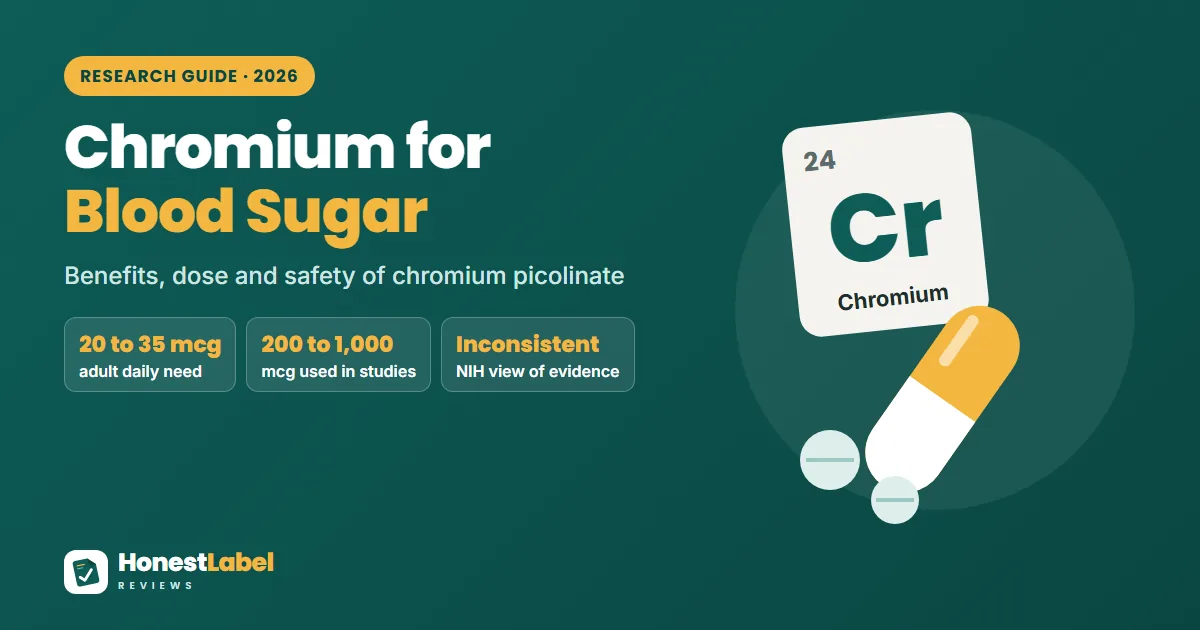
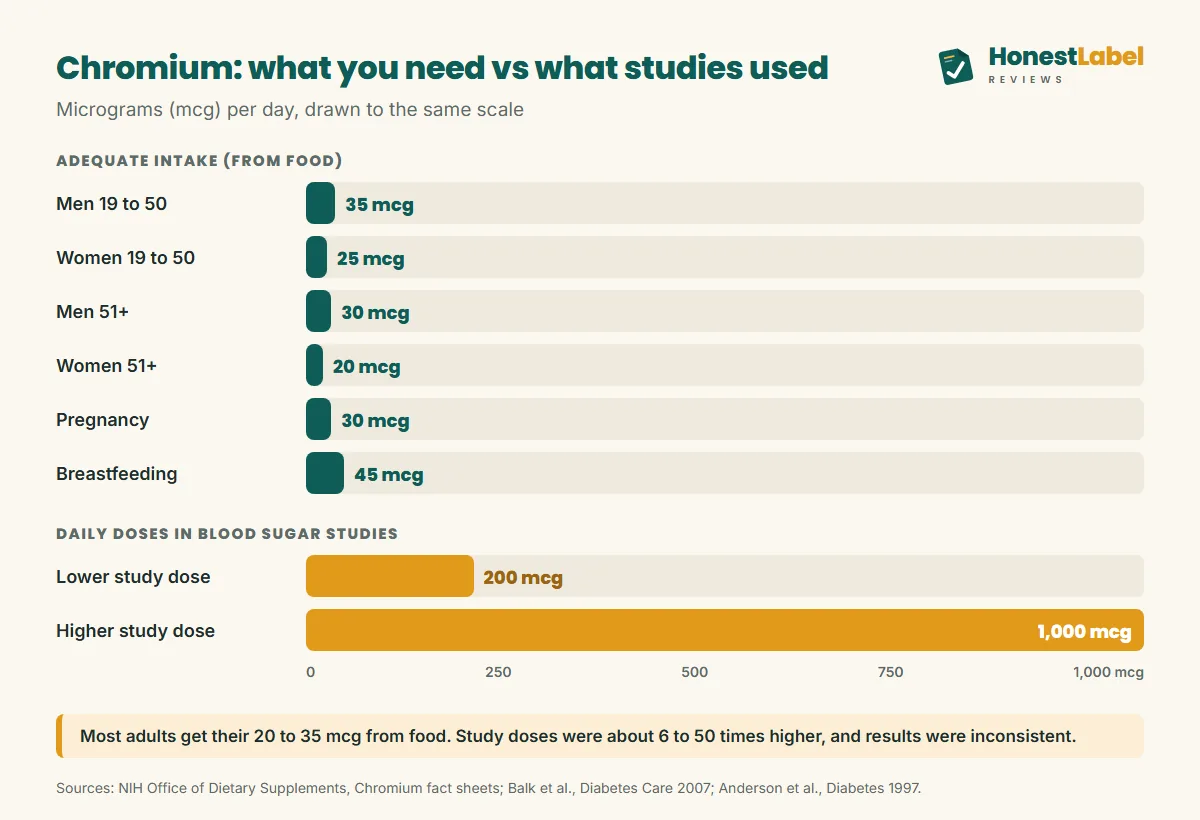
Chromium is a trace mineral that helps insulin work, but supplements have not reliably lowered blood sugar. Studies used about 200 to 1,000 mcg a day, far above the 20 to 35 mcg adults need, and the NIH describes the results as inconsistent. Serious side effects are rare, though a few kidney and liver cases have been reported.
Chromium picolinate is one of the most common ingredients in blood sugar formulas, and the idea behind it sounds simple. Your body needs chromium for insulin to do its job, so more chromium should mean better blood sugar. The research has not been that tidy. In this guide we go through what chromium does, how much you need, what the trials found, which forms you will see on labels, and who should avoid it. For a refresher on the numbers themselves, see our guide to normal blood sugar ranges.
What chromium does in the body
Chromium is a mineral your body needs in tiny amounts. The form in food and supplements is trivalent chromium, or chromium(III). It is a different substance from hexavalent chromium, or chromium(VI), a toxic industrial pollutant that has no place in food. The NIH Office of Dietary Supplements (ODS) explains that chromium appears to make insulin act more strongly, and that people fed by IV for long periods without chromium developed high blood sugar that improved once chromium was added back.
Those IV cases are the strongest evidence that chromium matters for glucose. They involve people with almost no chromium intake at all, which is very rare. For people who eat a normal diet, the question is whether extra chromium on top of what food provides makes any difference.
Your body also absorbs very little of it. The ODS fact sheet puts absorption from food at about 0.4 to 2.5 percent, and most of what you do absorb leaves in urine.
How much chromium you need
There is not enough data to set a full Recommended Dietary Allowance, so experts set an Adequate Intake (AI) instead. These are the adult values from the ODS consumer fact sheet:
| Group | Adequate Intake per day |
|---|---|
| Men 19 to 50 | 35 mcg |
| Women 19 to 50 | 25 mcg |
| Men 51 and older | 30 mcg |
| Women 51 and older | 20 mcg |
| Pregnancy (19 to 50) | 30 mcg |
| Breastfeeding (19 to 50) | 45 mcg |
No upper limit has been set, because there is not enough evidence on harm from high intakes. So nobody has measured where problems start, and the safety of high doses is unknown.
Food sources of chromium
Most people get enough from a normal diet, and the ODS says chromium deficiency appears to be rare. Chromium is spread thinly across many foods. Amounts vary with the soil and growing environment, the processing and even the cookware, so treat the figures below from the ODS fact sheet as rough guides:
- Broccoli, ½ cup: about 11 mcg
- Grape juice, 1 cup: about 8 mcg
- Whole wheat English muffin: about 4 mcg
- Mashed potatoes, 1 cup: about 3 mcg
- Beef, orange juice, turkey breast and whole wheat bread: about 1 to 2 mcg per serving
Whole grains, vegetables, meat and some spices all add small amounts. Highly processed sugary foods tend to be low in chromium, and the ODS notes that diets high in simple sugars increase how much chromium you lose in urine.
What the studies show for blood sugar
The early positive trial
The trial most often quoted in marketing came out of China in 1997. Researchers gave 180 adults with type 2 diabetes 200 mcg or 1,000 mcg of chromium picolinate a day, or a placebo, for four months (Anderson et al., 1997, Diabetes). A1C, fasting glucose and insulin fell, and the effect was largest in the 1,000 mcg group.
Many people in that study may have had low chromium intake to start with, and later trials in Western countries with different diets mostly did not see the same drop.
What the reviews found
- A 2007 systematic review of 41 randomised trials found no effect on glucose or insulin in people without diabetes. In people with type 2 diabetes it found small improvements in A1C and fasting glucose, but the authors described many trials as poor quality and said the results were inconsistent (Balk et al., 2007, Diabetes Care).
- A 2016 review by researchers including ODS scientists concluded there is limited evidence that chromium supplements help glycemic control in type 2 diabetes (Costello, Dwyer and Bailey, 2016, Nutrition Reviews).
- The ODS fact sheet sums up the trials as inconsistent, and points out that the US Food and Drug Administration allows only a qualified health claim, which says the link between chromium picolinate and lower insulin resistance is “highly uncertain”.
The American Diabetes Association’s Standards of Care say there is no clear evidence that mineral supplements such as chromium improve outcomes in people with diabetes who are not deficient.
Strong, weak and missing evidence
Strong evidence: chromium is needed for normal insulin action, based on people fed by IV without it. Weak evidence: supplements may lower A1C a little in some people with type 2 diabetes, mostly in older or lower-quality trials. Litle or no evidence: chromium helps people with normal blood sugar or prediabetes. If you are looking for the supplement with the most consistent trial results, our guide to berberine for blood sugar covers it, and spices such as cinnamon are covered in does cinnamon lower blood sugar.
Some researchers think the mixed results come down to who was tested. A person who is short on chromium might truly respond, while someone who already gets enough may not. There is no routine blood test that reliably shows your chromium status, so you cannot easily tell which group you are in.
Forms of chromium on supplement labels
| Form | What it is | Notes |
|---|---|---|
| Chromium picolinate | Chromium bound to picolinic acid | Most studied form, used in most blood sugar trials |
| Chromium polynicotinate or nicotinate | Chromium bound to niacin | Common in formulas, fewer trials |
| Chromium chloride | A simple chromium salt | Used in IV nutrition, poorly absorbed by mouth |
| Chromium histidinate | Chromium bound to the amino acid histidine | Small amount of research |
| Chromium-enriched yeast | Brewer’s yeast grown with chromium | Used in some trials, chromium content varies |
The ODS notes that picolinate appears to be absorbed better than some other forms, but nobody has shown which form, if any, works best for blood sugar. Labels list chromium in micrograms (mcg), and it is easy to misread mcg as mg. A milligram is 1,000 times larger. Our guide on how to read a blood sugar supplement label shows how to compare a label dose with trial doses.
Chromium picolinate dosage in studies
Studies have used about 200 to 1,000 mcg of chromium a day, usually for 2 to 4 months (Balk, 2007; Anderson, 1997, both linked above). The single biggest positive result came from the 1,000 mcg group in the Anderson trial, but later trials at that dose were not as convincing.
No health body sets a chromium dose for blood sugar, and the Adequate Intake of 20 to 35 mcg is easy to reach from food. If you and your doctor decide to try it, the sensible approach is the lower end of the studied range, a set trial period of about three months, and a follow-up A1C to see whether anything changed.
Side effects and safety
Most people who take chromium in the studied range report no problems, and serious side effects are rare. When side effects do show up, they are usualy mild, such as an upset stomach, headache, dizziness or trouble sleeping.
The ODS fact sheet lists a small number of case reports that are more worrying:
- Kidney damage (chronic interstitial nephritis) in a woman who took 600 mcg of chromium picolinate a day for six weeks
- Kidney failure, liver problems and anemia in a woman who took 1,200 to 2,400 mcg a day for four to five months
Case reports cannot prove chromium caused the problem, and they are rare given how many people take it. They do explain why people with kidney or liver disease are told to avoid high doses. Some lab studies on cells have also raised questions about picolinate and DNA damage. Those findings have not been confirmed in people, but they are one more reason not to take far more then you need.
Interactions with medicines
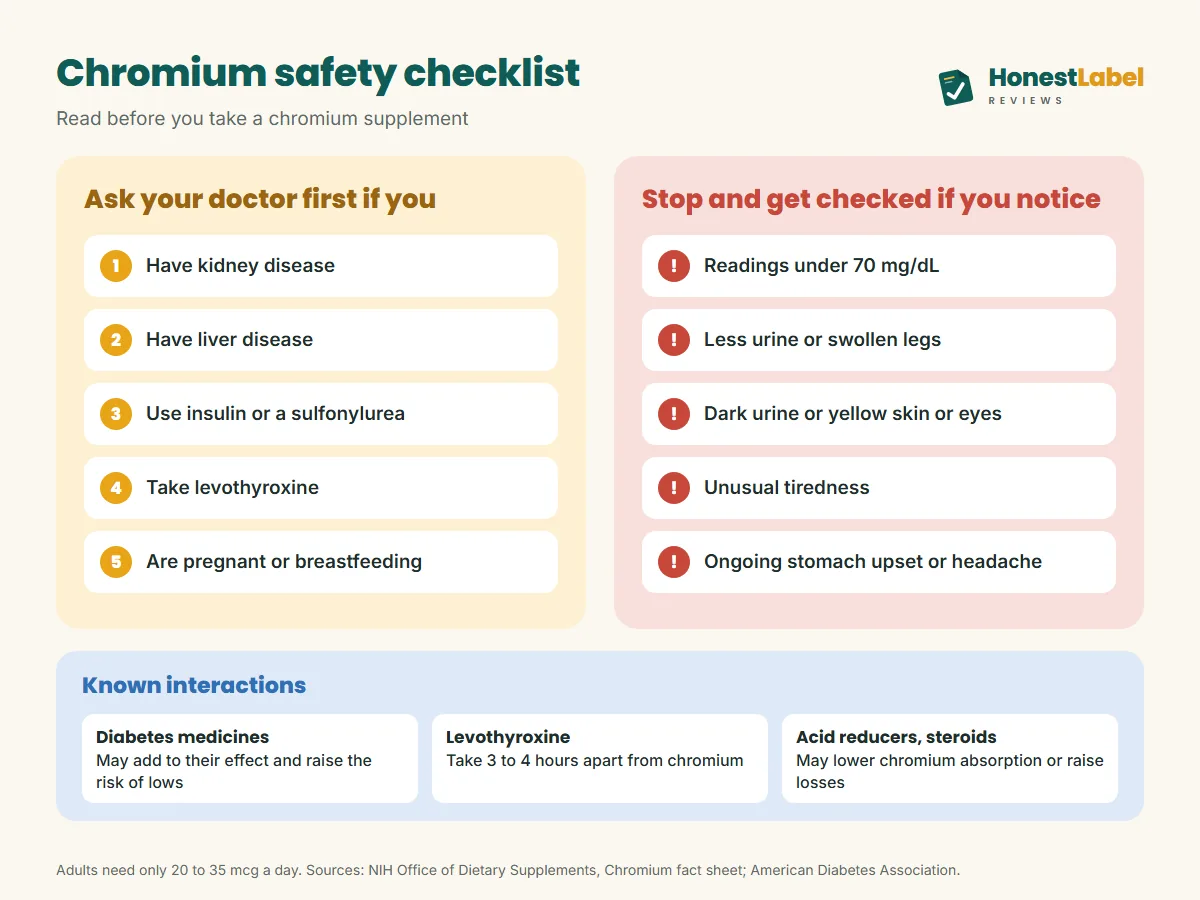
- Insulin and diabetes pills. The ODS warns that chromium could add to their effect and raise the risk of low blood sugar. That matters most with insulin and sulfonylureas such as glipizide or glyburide.
- Levothyroxine. Chromium may reduce how much thyroid medicine you absorb. The ODS suggests taking them at least 3 to 4 hours apart.
- Acid reducers and corticosteroids. Some references note that antacids, proton pump inhibitors and H2 blockers may lower chromium absorption, and corticosteroids may increase how much chromium you lose in urine.
Who should be careful
- People with kidney disease or liver disease. Avoid chromium supplements unless your specialist approves them, given the case reports above.
- Anyone on insulin, sulfonylureas or other glucose-lowering drugs. Check with your doctor first and test your blood sugar more often for the first few weeks.
- People taking levothyroxine. Space the doses apart, as above.
- Pregnant or breastfeeding women. Food meets the higher needs (30 and 45 mcg), and there is little research on high-dose supplements in pregnancy.
- People taking several blood sugar products at once. Chromium is in many multivitamins and blends, and it adds up. Check every label so you do not double up by accident.
It can feel weird that a mineral sold in every pharmacy needs this much care, but the government does not test supplements for safety or effect before they go on sale. The FDA can act against a supplement only after it is on the market and problems have occurred, so the checking falls to you and your doctor.
When to see a doctor
Chromium should never stand in for a diagnosis. Book an appointment if you:
- Get a fasting reading of 100 to 125 mg/dL (prediabetes) or 126 mg/dL or higher (possible diabetes), using the ADA’s diagnosis ranges
- Have readings under 70 mg/dL, which the ADA defines as low blood sugar, after starting chromium alongside diabetes medicine
- Notice less urine, swelling in your legs, dark urine, yellow skin or eyes, or unusual tiredness, which can signal kidney or liver trouble
- Have constant thirst, frequent urination or blurry vision, which are signs of high blood sugar
Get emergency help for confusion, fainting, a seizure, or a reading under 54 mg/dL that does not come up with treatment.
Frequently asked questions
How much chromium picolinate should I take for blood sugar?
There is no official dose for blood sugar. Studies used about 200 to 1,000 mcg a day (Balk, 2007), with mixed results. Adults need only 20 to 35 mcg a day according to the ODS, which most people get from food. If you want to try a supplement, agree on a dose with your doctor, especialy if you take diabetes medicine.
Can chromium cause low blood sugar?
On its own it is unlikely to cause a low in healthy people. Combined with insulin or sulfonylureas, the ODS says it could add to there effect, so check your blood sugar more often if you start it while on those medicines.
Is it safe to take chromium every day?
For most healthy adults, a daily dose within the studied range has not caused problems in trials. A few case reports link high doses to kidney or liver damage, so people with kidney or liver disease should avoid it, and nobody should go above the doses used in research.
Does chromium help with sugar cravings or weight loss?
The ODS describes any effect of chromium on body weight as small and of doubtful practical value. Research on cravings is limited and has produced mixed results.
The bottom line
Chromium is needed for normal insulin action, but most people allready get enough from food, and supplements have not reliably improved blood sugar in trials. Studies used 200 to 1,000 mcg a day with inconsistent results, and the NIH sums up the evidence that way too. Side effects are rare, though people with kidney or liver disease and anyone on insulin, sulfonylureas or levothyroxine should talk to a doctor first. Walking after meals, more fiber and steady weight loss have far stronger evidence, and they are easier to accommodate into a normal week than you might think.
Sources
- NIH Office of Dietary Supplements. Chromium Fact Sheet for Health Professionals; Chromium Fact Sheet for Consumers.
- Anderson RA, et al. Elevated intakes of supplemental chromium improve glucose and insulin variables in individuals with type 2 diabetes. Diabetes, 1997. PubMed.
- Balk EM, et al. Effect of chromium supplementation on glucose metabolism and lipids: a systematic review of randomized controlled trials. Diabetes Care, 2007. PubMed.
- Costello RB, Dwyer JT, Bailey RL. Chromium supplements for glycemic control in type 2 diabetes: limited evidence of effectiveness. Nutrition Reviews, 2016. PubMed.
- American Diabetes Association. Diagnosis; Hypoglycemia (Low Blood Glucose).
Medical disclaimer: This article is for general information and is not medical advice. It does not replace a diagnosis or treatment from your doctor. If you have diabetes or take medication that affects blood sugar, talk to your healthcare provider before changing your diet, exercise or supplements.