Last reviewed: November 2026 · Sources: CDC, NIH (NIDDK), American Diabetes Association, Mayo Clinic and peer-reviewed studies (listed at the end)
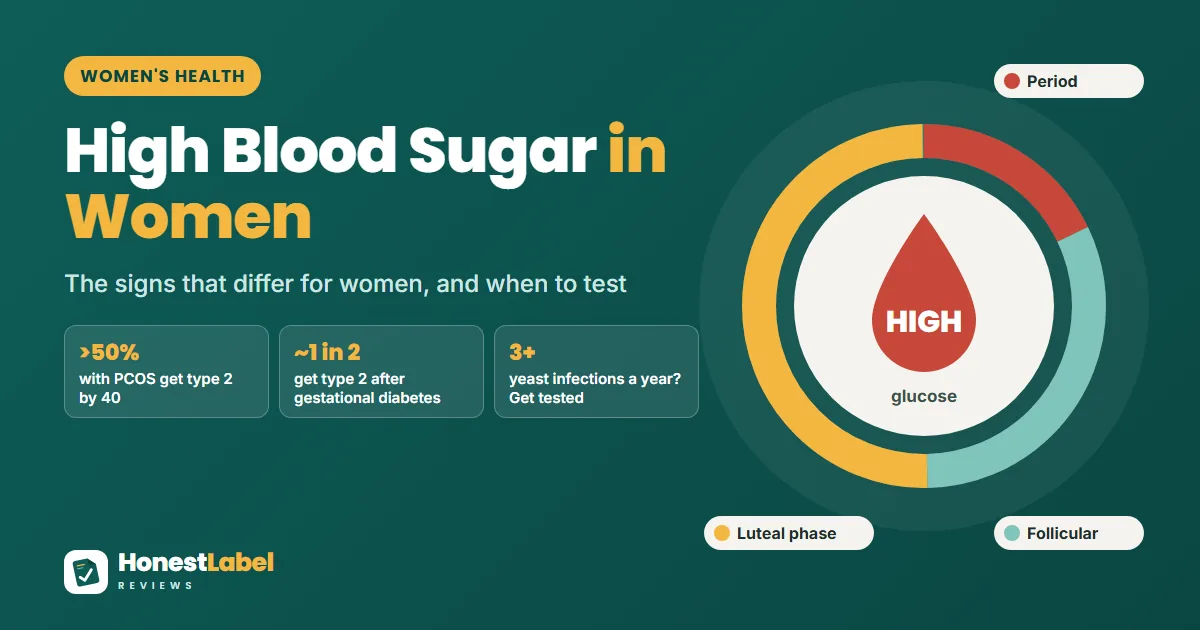
Women get the same core signs of high blood sugar as men: thirst, peeing more, tiredness and blurry vision. Some signs are specific to women, though: repeated vaginal yeast infections, more urinary tract infections, vaginal dryness and lower desire, and blood sugar swings around periods and menopause. PCOS and a history of gestational diabetes also raise the risk sharply.
If you want the numbers first, our guide to normal blood sugar ranges has the full chart for fasting, after-meal and A1C results. The general symptoms of diabetes, such as thirst and frequent urination, are covered in detail in our post on the early signs of type 2 diabetes, so we won’t go over them again here.
This article covers what is different for women. Several early clues show up in the vagina, the bladder or the bedroom. Those clues are easy to put down to something else, so they often get treated one at a time while the cause goes unnoticed.
Why high blood sugar can look different in women
Estrogen and progesterone both affect how cells respond to insulin. Mayo Clinic explains that when these hormones shift, as they do through the cycle and at menopause, blood sugar can shift with them (Mayo Clinic). That means a woman can see swings that have nothing to do with what she ate.
The CDC’s National Diabetes Statistics Report puts the total at 40.1 million people in the US with diabetes, and more than 1 in 4 of them are undiagnosed. According to the CDC’s page on diabetes and women, about 19 percent of women aged 65 and older have been diagnosed with diabetes, which is more than 5.8 million women.
The female-specific signs of high blood sugar
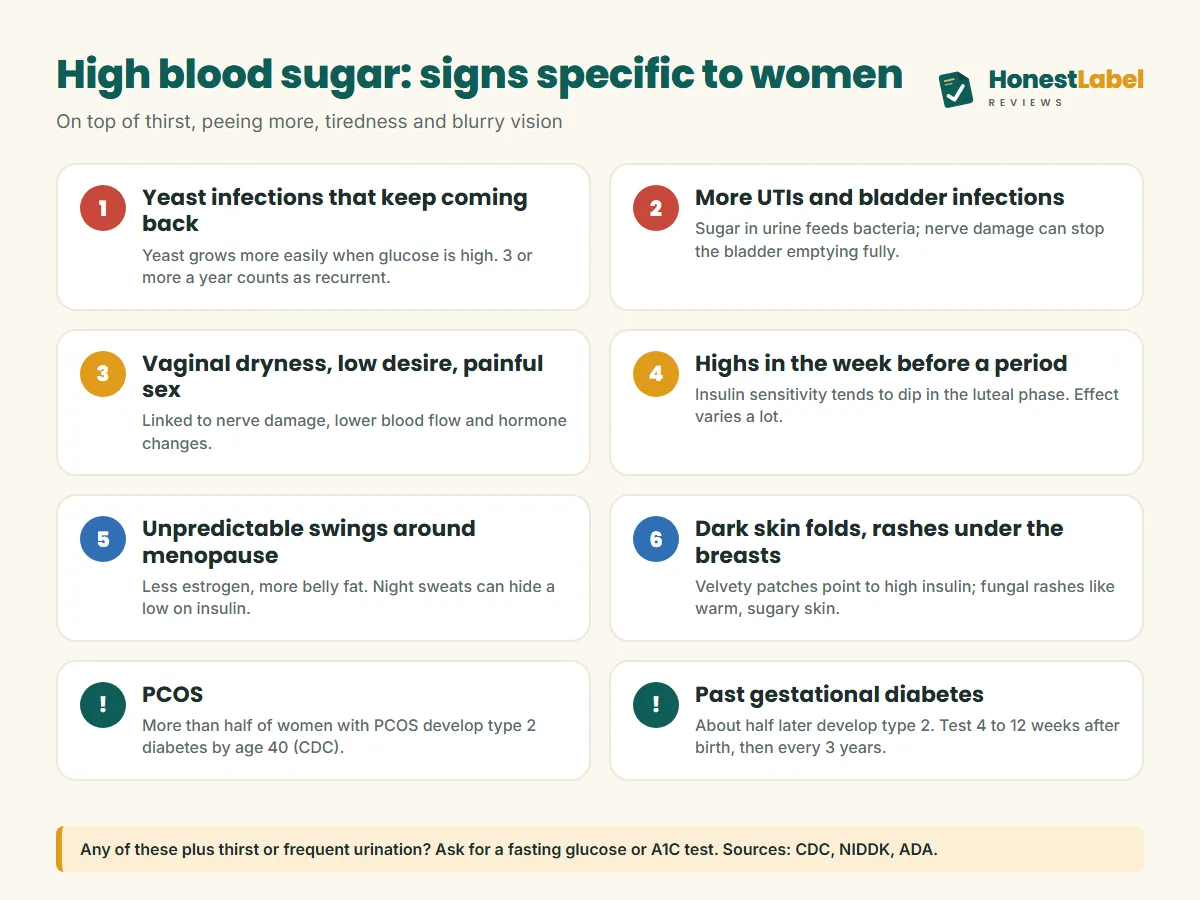
1. Vaginal yeast infections that keep coming back
Yeast (usually Candida) feeds on sugar. When blood sugar runs high, more glucose ends up in vaginal secretions and in urine, and yeast grows more easily. The NIDDK states plainly that women with diabetes are more likely to get yeast infections for this reason.
The typical signs are itching, burning, soreness and a thick white discharge. One infection after antibiotics is common. The pattern to watch is infections that keep returning. The CDC’s treatment guidelines define recurrent yeast infection as three or more episodes in a year, and they name diabetes as one possible cause behind repeat infections. Repeated infections are a good reason to ask for a fasting glucose or A1C test.
One extra point if you already take diabetes medication. A group of drugs called SGLT2 inhibitors works by sending glucose out in the urine, and genital yeast infections are a known side effect. If infections start after a new prescription, tell your doctor, but keep taking the drug until you have spoken with them.
2. Urinary tract and bladder infections
The CDC notes that women with diabetes have a higher risk of urinary tract infections. Sugar in the urine helps bacteria grow, and over time high blood sugar can damage the nerves that tell the bladder to empty fully.
A study cited in the NIH’s Diabetes in America report found bacteria in the urine without symptoms in 26 percent of women with diabetes, compared with 6 percent of women without it (NIDDK, Diabetes in America). Signs of a UTI include burning when you pee, needing to go urgently, cloudy or strong-smelling urine and lower belly pain. Fever, back pain or vomiting can mean the infection has reached the kidneys and needs same-day care.
3. Vaginal dryness, low desire and painful sex
Few people connect this one with blood sugar. The NIDDK lists low desire, reduced arousal, vaginal dryness and painful sex among the sexual problems linked to diabetes. The causes are nerve damage, lower blood flow to the genitals and hormone changes (NIDDK).
These changes are also common around menopause, so on their own they prove little. Together with thirst or repeated infections, they are worth raising, and a doctor can treat dryness and pain directly.
4. Blood sugar swings that follow your cycle
Many women who check there glucose notice higher readings in the week or so before a period. In the second half of the cycle (the luteal phase), progesterone rises and the body tends to become a little less sensitive to insulin. Small studies, mostly in women with type 1 diabetes, have found insulin needs tend to rise in this phase, though the size of the effect varies a great deal from one woman to the next (PubMed search). The evidence here is thin and based on small groups, so treat it as something to check in your own readings.
If you use a meter or a sensor, mark the first day of each period in your log for two or three months. If the highs line up with the same days each month, tell your doctor.
5. Night sweats and mood changes around menopause
After menopause the body makes less estrogen, which the CDC says can cause unpredictable ups and downs in blood sugar. Weight also tends to settle around the waist, which adds to insulin resistance.
Hot flushes, night sweats, poor sleep, irritability and brain fog are classic menopause symptoms, but sweating at night and feeling shaky or foggy can also be signs of blood sugar going too low in women who take insulin or a sulfonylurea. If you take one of those medicines, a quick finger-prick check tells you which one you are dealing with, and a low needs treating straight away.
6. Changes on the skin
Dark, velvety patches on the neck, armpits or under the breasts (acanthosis nigricans) point to high insulin levels and often appear before blood sugar rises. Itchy skin and fungal rashes in warm skin folds, such as under the breasts or in the groin, are also more common when glucose runs high.
The female risk factors that matter most
Two conditions stand out. If you have either one, regular testing matters more than watching for symptoms.
PCOS
Polycystic ovary syndrome is tightly linked to insulin resistance. High insulin pushes the ovaries to make more androgens, which drives irregular periods, acne and extra hair growth. We explain those early clues in our article on the signs of insulin resistance.
The diabetes risk is high. The CDC states that more than half of women with PCOS develop type 2 diabetes by age 40, and advises women with PCOS to ask about being tested. Being slim does not rule it out.
Gestational diabetes in a past pregnancy
Gestational diabetes is high blood sugar that first appears in pregnancy, usually found with a glucose drink test between weeks 24 and 28. It usualy goes away after the birth, but it is a warning about the future. The CDC says about half of women with gestational diabetes go on to develop type 2 diabetes.
The American Diabetes Association advises a glucose test 4 to 12 weeks after the birth, and then testing at least every 3 years for life. If you can’t remember your last test, book one.
Why the stakes are higher for women’s hearts
Heart disease is the most common serious complication of diabetes, and the extra risk it brings appears to be larger for women. A 2014 analysis of 64 studies with more than 850,000 people found that diabetes raised the risk of coronary heart disease about 2.8 times in women and about 2.2 times in men. Put another way, the extra risk linked to diabetes was about 44 percent greater in women than in men (Peters, Huxley and Woodward, 2014). The studies were observational, so the reason for the gap is still unclear.
Women’s heart attack symptoms can be less typical. Shortness of breath, nausea, unusual tiredness and pain in the jaw, neck or back are more common in women, according to the CDC. The CDC also notes that heart disease risk climbs after menopause, so the years after 50 are a good time to check blood pressure, cholesterol and blood sugar together.
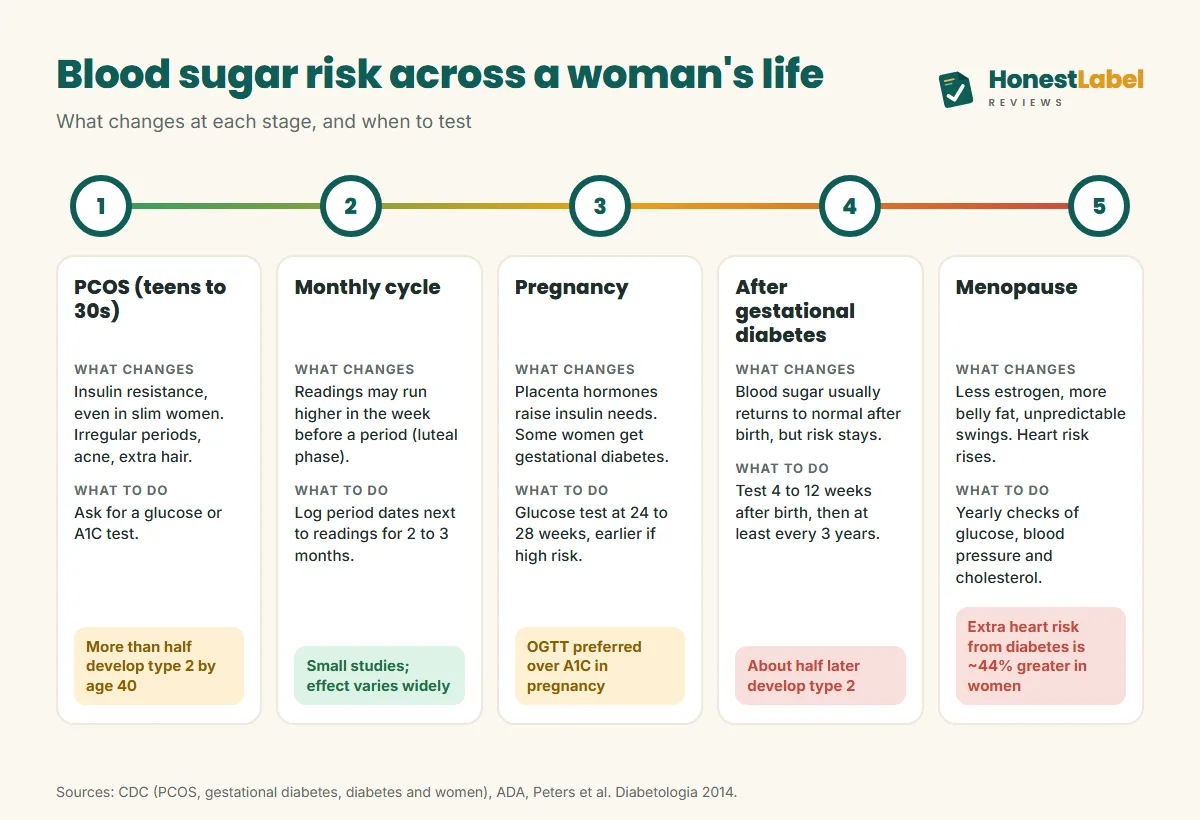
| Life stage | What changes | What to do |
|---|---|---|
| Teens to 30s with PCOS | Insulin resistance, more than half develop type 2 by 40 | Ask for a glucose or A1C test, then repeat as your doctor advises |
| Monthly cycle | Readings may run higher in the week before a period | Log period dates next to glucose readings for 2 to 3 months |
| Pregnancy | Placenta hormones raise insulin needs; gestational diabetes in some | Glucose test at 24 to 28 weeks, earlier if at high risk |
| After gestational diabetes | About half later develop type 2 | Test 4 to 12 weeks after the birth, then at least every 3 years |
| Perimenopause and menopause | Less estrogen, more belly fat, unpredictable swings | Annual checks, and test before assuming a sweat is a hot flush |
How to find out where you stand
Symptoms only tell you so much. A lab test settles it, and the cut-offs are the same for women and men:
- Fasting glucose: under 100 mg/dL is normal, 100 to 125 is prediabetes, 126 or higher is diabetes
- A1C: under 5.7% is normal, 5.7% to 6.4% is prediabetes, 6.5% or higher is diabetes
- 2-hour glucose drink test (OGTT): under 140 is normal, 140 to 199 is prediabetes, 200 or higher is diabetes
These ranges come from the ADA. A few points apply to women in particular. Heavy periods can cause iron deficiency anemia, which can make an A1C read falsely high or low, so a fasting glucose or OGTT may be more reliable for you. During pregnancy and shortly after it, A1C is also less accurate, which is why the glucose drink test is preferred then.
Before your appointment, note how many yeast infections or UTIs you have had this year, your period pattern, any past pregnancy results and every medicine you take.
Practical steps if your numbers are high
If testing shows prediabetes or early type 2 diabetes, the same habits help women and men. Our guide on how to lower blood sugar naturally covers the evidence for each one. A few points are specific to women:
- With PCOS, a modest weight loss, if you have weight to lose, can make periods more regular and improve insulin sensitivity. Your doctor may also discuss metformin.
- After gestational diabetes, the most useful single step is keeping up the tests, because type 2 can start years later without symptoms. Keep your pregnancy results in a separate folder so any new doctor can see them.
- Around menopause, strength training helps hold on to muscle, which is where most glucose goes after a meal.
- For repeated yeast infections, treating the infection alone tends to fail if blood sugar stays high. Getting glucose down usually makes them less frequent.
Who should be careful
- Pregnant or trying to conceive. Weight-loss diets are not advised in pregnancy, and some diabetes drugs and supplements are unsafe. Talk to your doctor or midwife before changing anything.
- Taking insulin or a sulfonylurea. Eating fewer carbs, exercising more or starting a supplement can push blood sugar below 70 mg/dL. Check more often when you make changes.
- Kidney or liver disease. Some medicines and supplements are not safe, so get a doctor’s okay first.
Never stop or change a prescribed medicine on your own because a symptom has improved.
When to see a doctor
Book an appointment within a week or two if you have:
- Three or more yeast infections or UTIs in a year, or one that won’t clear with treatment
- PCOS and no glucose test in the last year or two
- Gestational diabetes in the past and no test in the last 3 years
- Thirst, frequent urination or blurry vision together with any of the female signs above
- Vaginal dryness, pain or low desire that is new and noticeable, especially with other signs
- A fasting home reading of 126 mg/dL or more on two mornings
Get urgent care the same day for any of these red flags:
- A UTI with fever, back or side pain, or vomiting
- Vomiting, deep fast breathing or a fruity smell on the breath along with high blood sugar or strong thirst
- Confusion, fainting or extreme drowsiness
- Chest pain, shortness of breath, or pain in the jaw, neck or back with nausea or sweating (call emergency services)
- High blood sugar in pregnancy with headache, vision changes or swelling
Frequently asked questions
What are the first signs of high blood sugar in women?
Often it is a yeast infection that keeps coming back, a run of UTIs, or itchy skin in the folds. Thirst and frequent urination tend to come later. Many women have no signs at all, so testing is the reliable route.
Can high blood sugar cause yeast infections?
Yes. The NIDDK says women with diabetes are more likely to get yeast infections because yeast grows more easily when glucose is high.
Does your period affect blood sugar?
It can. Many women see higher readings in the days before a period. The effect varies widely, so track your own readings against your cycle.
Can menopause cause high blood sugar?
Not on its own, but lower estrogen, weight gain around the waist and poorer sleep can all make blood sugar harder to control, so annual checks make sense in these years.
Is diabetes more dangerous for women?
For the heart, the evidence suggests it is. A large 2014 analysis found the extra heart disease risk linked to diabetes was about 44 percent greater in women than in men.
The bottom line
High blood sugar symptoms in women include the usual thirst and tiredness, plus clues that are easy to miss: recurrent yeast infections, more UTIs, vaginal dryness or pain, and swings that follow the cycle or start around menopause. PCOS and a history of gestational diabetes raise the risk a lot, and diabetes seems to hit women’s hearts harder. If any of this sounds familiar, a fasting glucose or A1C test is quick, and it is the only way to know where you stand. Plenty of women believe they would feel something if their blood sugar was high, yet many feel nothing at all.
Sources
- Centers for Disease Control and Prevention. Diabetes and Women; PCOS (Polycystic Ovary Syndrome) and Diabetes; Gestational Diabetes; Women and Heart Disease; National Diabetes Statistics Report.
- National Institute of Diabetes and Digestive and Kidney Diseases (NIH). Diabetes, Sexual, & Bladder Problems; Diabetes in America, 3rd edition, chapter 28: Urologic Diseases and Sexual Dysfunction in Diabetes.
- American Diabetes Association. Diagnosis.
- Mayo Clinic. Diabetes and menopause: A twin challenge.
- Peters SA, Huxley RR, Woodward M. Diabetes as risk factor for incident coronary heart disease in women compared with men: a systematic review and meta-analysis of 64 cohorts including 858,507 individuals and 28,203 coronary events. Diabetologia, 2014. PubMed.
- Studies on the menstrual cycle, insulin sensitivity and glucose. PubMed search.
Medical disclaimer: This article is for general information and is not medical advice. It does not replace a diagnosis or treatment from your doctor. If you have diabetes or take medication that affects blood sugar, talk to your healthcare provider before changing your diet, exercise or supplements.